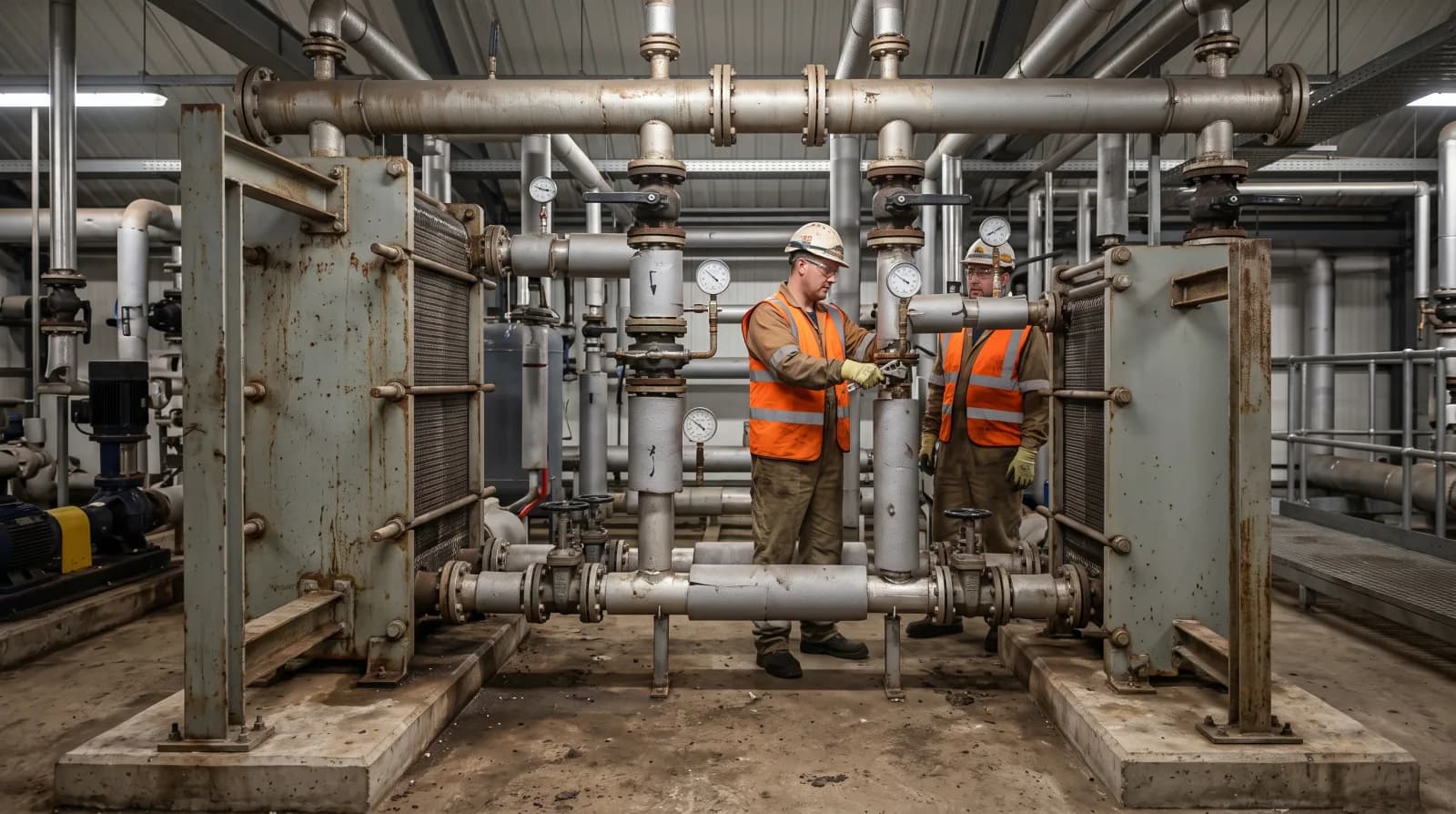
Calorifier repairs
Calorifier repairs fix coils, leaks and scale in stored hot water systems. Send the nameplate and what has happened, and a specialist who works on that type will come back to you. Coverage is UK wide.
Tell us about your calorifier repairs
Five answers, all from memory. The detail comes next, and it is optional.
See the privacy notice for how these details are handled.
Common calorifier problems
The vessel or coil is leaking
Water where it should not be, from the coil, the shell or a joint.
Leak testing →ComplianceInspection or a written scheme is due
Examination intervals, water hygiene requirements, or a unit with no records.
Inspection options →Plant downIt has failed or is leaking
Fluids mixing, a leak at the unit, or one that will not hold pressure.
Emergency repair →UnsureNot sure what is wrong
Send the nameplate and what you have noticed. That is enough to get an answer.
Send the details →What goes wrong with calorifiers
Calorifier repairs cover coil failures, scale and corrosion in stored hot water systems. The water hygiene regime matters as much as the pressure vessel here, because a drain down for inspection is itself a hygiene event.
- Coil or battery leakage. Pinholing or splitting of the heating coil, which puts primary water into the stored hot water. Coil failure shows as pressure loss on the primary side, or as contamination of the secondary.
- Scale on the coil. In hard water areas, scale builds on the outside of the coil and insulates it. Recovery time lengthens and the boiler runs longer for the same result, which usually gets blamed on the boiler.
- Shell corrosion. Internal corrosion of the vessel itself, often where the lining has failed or where the sacrificial anode has been consumed and never replaced.
- Anode depletion. Sacrificial anodes are consumable. Once gone they protect nothing, and the corrosion moves to the vessel. Anodes are a maintenance item that is often forgotten entirely.
- Stratification and dead legs. Cool zones in the base of the vessel, or in poorly circulated pipework. A hygiene problem before it is a performance one.
Calorifier repair options
- Replace the coil or battery
- Where the coil has failed but the vessel is sound. Access and coil availability decide feasibility, particularly on older or non-standard units.
- Descale
- Chemical descaling of the coil, matched to the coil material. Worth pairing with a look at the water treatment, because otherwise the scale returns on the same schedule.
- Internal inspection
- Drain down, open up and examine the vessel internally, including the anode. Internal examination is the only way to establish the condition of the shell, and a written scheme of examination will require it in any case.
- Replace anodes
- Cheap, quick, and the single most neglected item on a calorifier.
What to check before a calorifier repair
- Calorifiers sit under ACOP L8 as well as under pressure systems regulation. Stored water is generally held at 60 degrees and distributed at 50, reaching outlets within a minute, and any repair has to leave that regime intact
- Scale on the coil is often diagnosed as a boiler problem, because the symptom is long recovery rather than anything visibly wrong
- A drain down for inspection is itself a hygiene event, so refilling, disinfection and sampling belong in the plan rather than as an afterthought
- Pressure systems in the UK sit under PSSR 2000, so a calorifier needs a written scheme of examination and repairs have to leave it certifiable against it
Calorifier repairs questions
Is it worth repairing a calorifier or replacing it?
Coil failure with a sound vessel is usually a repair. A corroded shell is usually a replacement, because the vessel is the pressure envelope and patching it is rarely the right answer. Access often decides it in practice: some plantrooms were built around the calorifier.
Why is the hot water slow to recover?
Most often scale on the heating coil, insulating it from the stored water. Scale looks like a boiler or a sizing problem and is neither. The giveaway is that performance has fallen gradually in a hard water area.
How often should a calorifier be inspected internally?
The written scheme of examination sets the interval and the competent person who drew it up decides that. Water hygiene regimes usually drive their own inspection frequency as well, and the two are best planned together rather than separately.