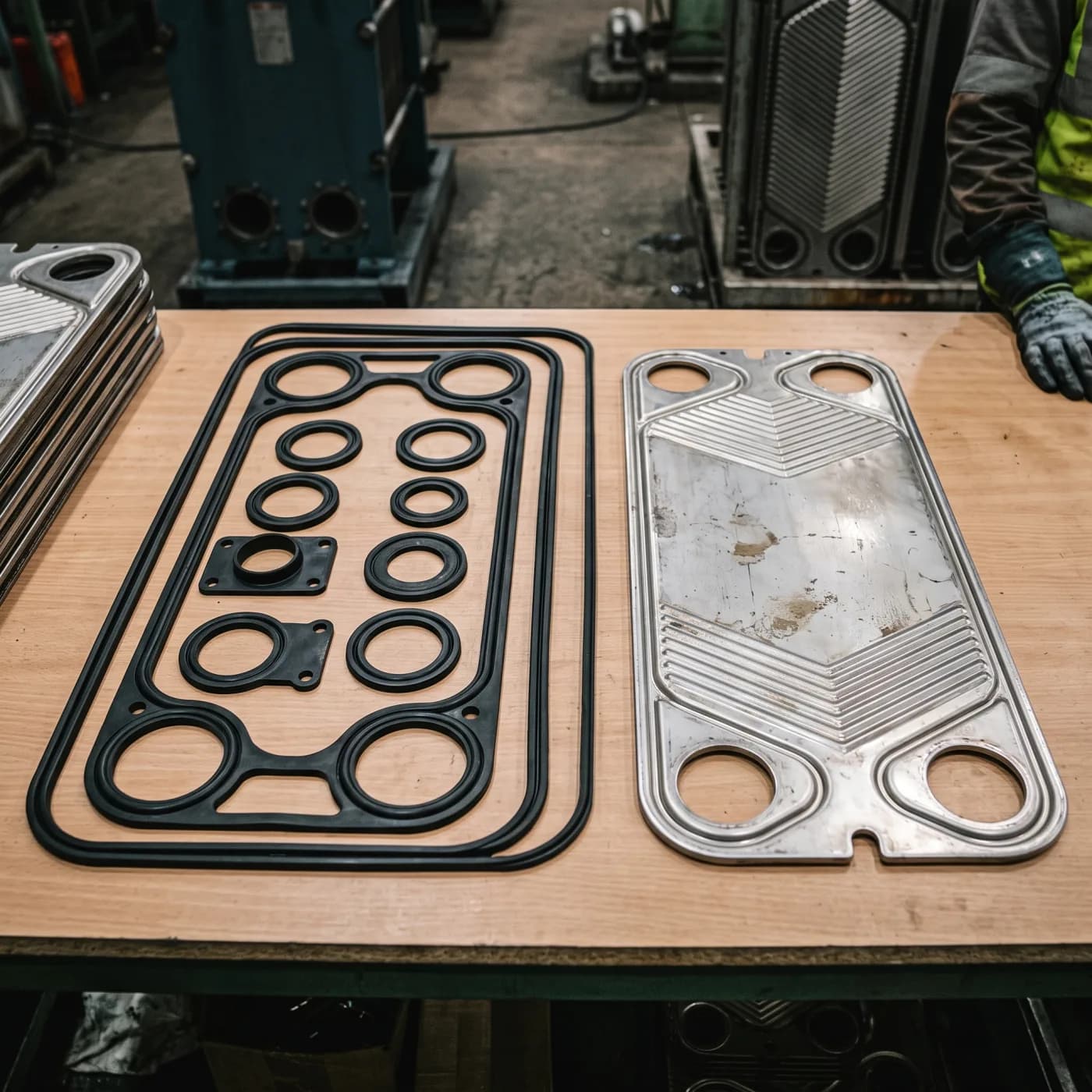
Plate heat exchanger regasketing
Plate heat exchanger regasketing replaces every gasket in the pack. Send the nameplate and what has happened, and a specialist who works on that type will come back to you. Coverage is UK wide.
Tell us about your plate heat exchanger regasketing
Five answers, all from memory. The detail comes next, and it is optional.
See the privacy notice for how these details are handled.
Common plate heat exchanger problems
The two fluids are mixing
Product or utility appearing on the wrong side, which normally means a cracked plate.
Repair options →Losing dutyPressure drop up, duty down
Fouling between the plates, widening the approach temperature and restricting flow.
Cleaning options →Plant downIt has failed or is leaking
Fluids mixing, a leak at the unit, or one that will not hold pressure.
Emergency repair →UnsureNot sure what is wrong
Send the nameplate and what you have noticed. That is enough to get an answer.
Send the details →Signs plate heat exchanger gaskets need replacing
Plate heat exchanger regasketing replaces every gasket in the pack as a set, in a material matched to the fluid and the temperature. A regasket fixes a pack that is weeping at the edge. It does not fix a pack where the two fluids are mixing.
- Weeping along the edge of the pack, usually the first sign
- A pack that has been tightened to stop a leak and has started leaking again
- Gaskets that have gone hard, cracked, or taken a permanent set when the pack is opened
- Swelling or softening, which means the material is wrong for the fluid rather than simply old
- A pack now sitting near its minimum tightening dimension, which it reaches through repeated tightening
The plate heat exchanger regasketing process
Send the details
The nameplate and the plate model. Gaskets are model specific, so availability is established before anything is opened.
Old gaskets off, grooves cleaned
Gaskets are lifted out of the plate groove without damaging the pressing, and the groove is cleaned back to bare metal. A new gasket bonded onto old adhesive fails early, and a damaged groove will not hold a clip-on gasket at all.
The right material, fitted properly
Nitrile, EPDM and fluoroelastomer gaskets each suit a different fluid and temperature range. The material is matched to the duty rather than copied from what came off, since what came off may be the reason the pack failed.
Rebuild and test
The plates are hung back on the carrying bar in order, and the follower plate is drawn up on the tie bars evenly until the pack reaches its specified dimension. Over-tightening a new gasket set is the most common reason a fresh regasket leaks.
What affects a regasketing job
Gaskets are replaced as a set
Every gasket in the pack has aged in the same fluid at the same temperature, so they reach the end of their life together. Replacing only the failed ones books the next breakdown.
Availability by model
Gaskets are specific to the plate model. For discontinued units, availability is the constraint that decides turnaround, and occasionally it decides whether the unit is worth keeping at all.
Regasketing is not a repair for cracked plates
New gaskets stop a leak between plates. New gaskets do nothing about cross contamination. A crack or pinhole in a plate causes that, and the plate has to be replaced.
Plate condition changes the sums
Since the pack has to be opened and cleaned anyway, this is the natural moment to inspect. If enough plates fail inspection, a regasket alone is spent on a unit that will fail again shortly.
Plate heat exchanger regasketing questions
How long should plate gaskets last?
It depends far more on temperature and fluid than on age. A gasket in a hot or aggressive duty ages quickly; the same gasket on mild heating water lasts a long time. Condition when the pack is opened tells you more than the date it was fitted.
Glued or clip-on, which is better?
Clip-on gaskets are faster to fit and can be changed on site, which suits units that come apart often. Glued gaskets, cured in an oven under compression, generally hold better in demanding duties. The plate model usually decides it for you.
Can I just tighten the pack instead?
It sometimes stops a weep for a while, and every time it does, the pack gets closer to its minimum dimension. Below that dimension the pack cannot seal at all and the plates begin to deform, so tightening only postpones a larger job.