Heat exchanger inspection and NDT
Heat exchanger inspection measures the condition of tubes and plates. Send the nameplate and what has happened, and a specialist who works on that type will come back to you. Coverage is UK wide.
Tell us about your inspection and ndt
Five answers, all from memory. The detail comes next, and it is optional.
See the privacy notice for how these details are handled.
Common problems that need inspection and ndt
It has failed or is leaking
Fluids mixing, a leak at the unit, or one that will not hold pressure.
Emergency repair →Losing dutyPerformance has dropped
Higher pressure drop, a wider approach temperature, or a duty it no longer reaches.
Cleaning options →PlannedA service or shutdown is coming
Planned maintenance, an outage window, or a spare that needs to be ready.
Servicing options →UnsureNot sure what is wrong
Send the nameplate and what you have noticed. That is enough to get an answer.
Send the details →When to inspect a heat exchanger
Heat exchanger inspection and NDT measure the condition of tubes and plates rather than estimating it from the age of the unit. Inspection turns a retube or replace decision into evidence, and these are the points at which it earns its cost.
- Before committing to a retube, because the cost of the inspection is small against the cost of the wrong decision
- A rising count of plugged tubes at each shutdown
- Nearing the end of a written scheme examination interval
- A change of duty, fluid or water treatment that the original material was not chosen for
- Buying, inheriting or recommissioning a unit with no history
Heat exchanger inspection and NDT methods
Send the details
The unit, the tube material if known, and the decision you are trying to make. Inspecting before a retube decision is different from inspecting to satisfy a scheme.
Clean first
Deposit blinds every internal method, so cleaning is what makes the difference between a measurement and an estimate.
The method follows the material
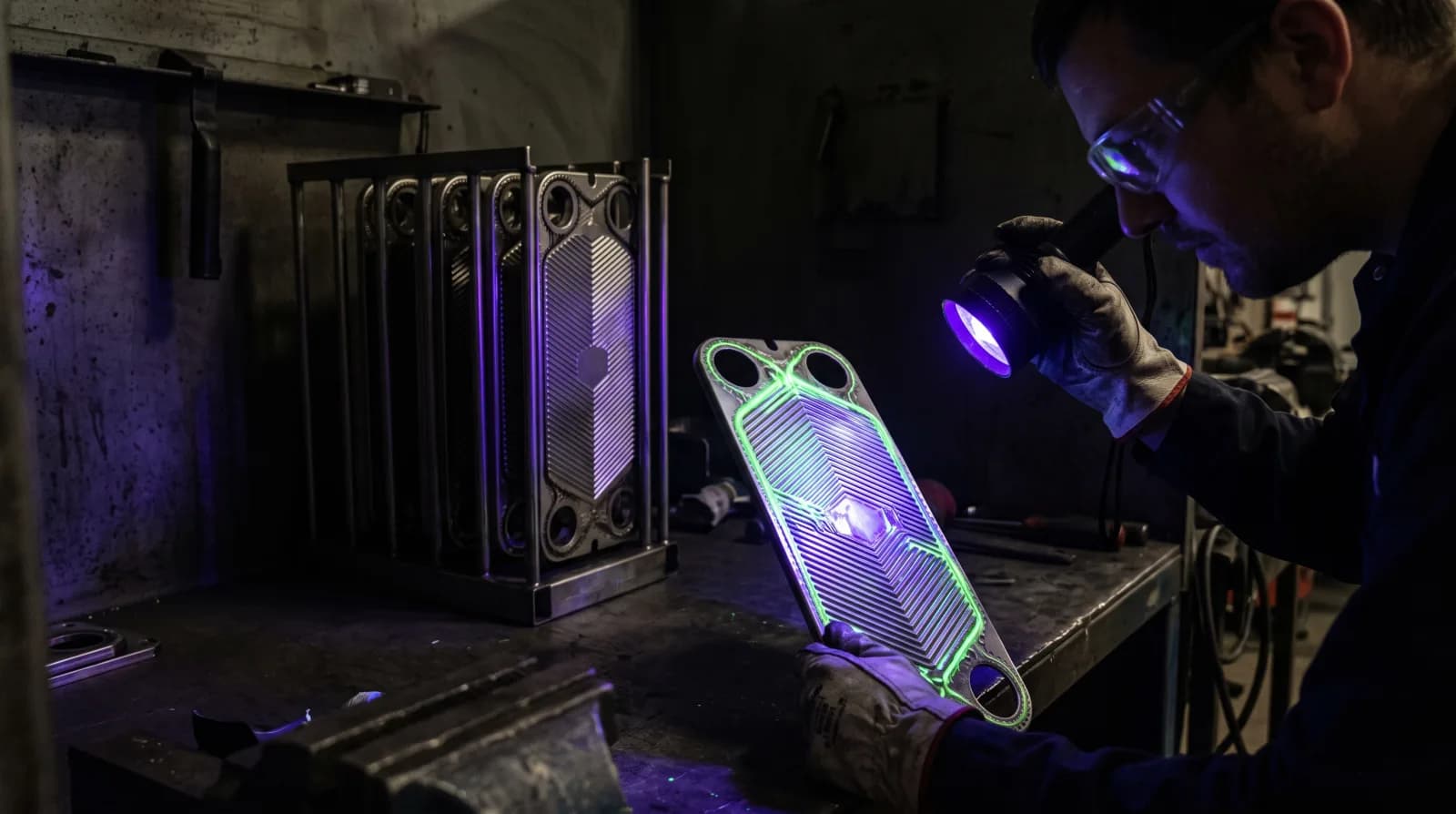
Eddy current suits non-ferrous tubes and is fast. Ultrasonic methods such as IRIS give a true wall thickness and suit ferrous tubes. Plates are checked with dye penetrant under ultraviolet light.
The report
Which tubes or plates have lost what, mapped to their position. One inspection gives condition, two give the rate, and the rate is what you plan around.
Getting a useful inspection result
Tube material decides the method
There is no single technique that covers every tube material well. Eddy current on carbon steel tubes produces a report that looks complete but means very little.
Tubes have to be clean
Deposit blinds every internal method. Cleaning before inspection is what makes the difference between a measurement and an estimate.
Sampling against full coverage
A partial inspection is cheaper and can be enough for a trend. Sampling is not enough when the decision is whether to retube, because the tubes that matter are the ones outside the sample.
Comparing like with like
Inspection is most valuable as a series. Keeping the method and the reporting format consistent between inspections is worth more than upgrading to a better technique each time.
Inspection and NDT questions
What is the temperature and pressure limit for a plate heat exchanger?
Set by the unit's own design conditions and by the gasket material, not by a general figure. The nameplate carries the design pressure and temperature, and the gasket specification narrows it further, which is why the plate is the first thing asked for.
What is a main cause of heat exchanger failure?
Fouling and corrosion account for most of it. Fouling costs performance first and can lead to under-deposit corrosion; corrosion thins the metal separating the two fluids until it leaks. Mechanical causes such as vibration and thermal cycling account for much of the rest.
How often should tubes be inspected?
The written scheme of examination sets the formal interval, and the competent person who drew it up decides that. Beyond compliance, the useful interval is the one that catches a trend before it becomes a failure, and that depends on how aggressive the duty is.
Does inspection need the bundle removed?
No. Tube inspection is done through the open channel with the bundle in place. Removing it lets the shell side and the outside of the tubes be examined too, which matters where the corrosion is coming from the shell side.
What does the report tell me?
Which tubes have lost wall thickness and how much, mapped to the tubesheet. Set against the previous inspection, that is what turns a guess about remaining life into a plan for the next shutdown.