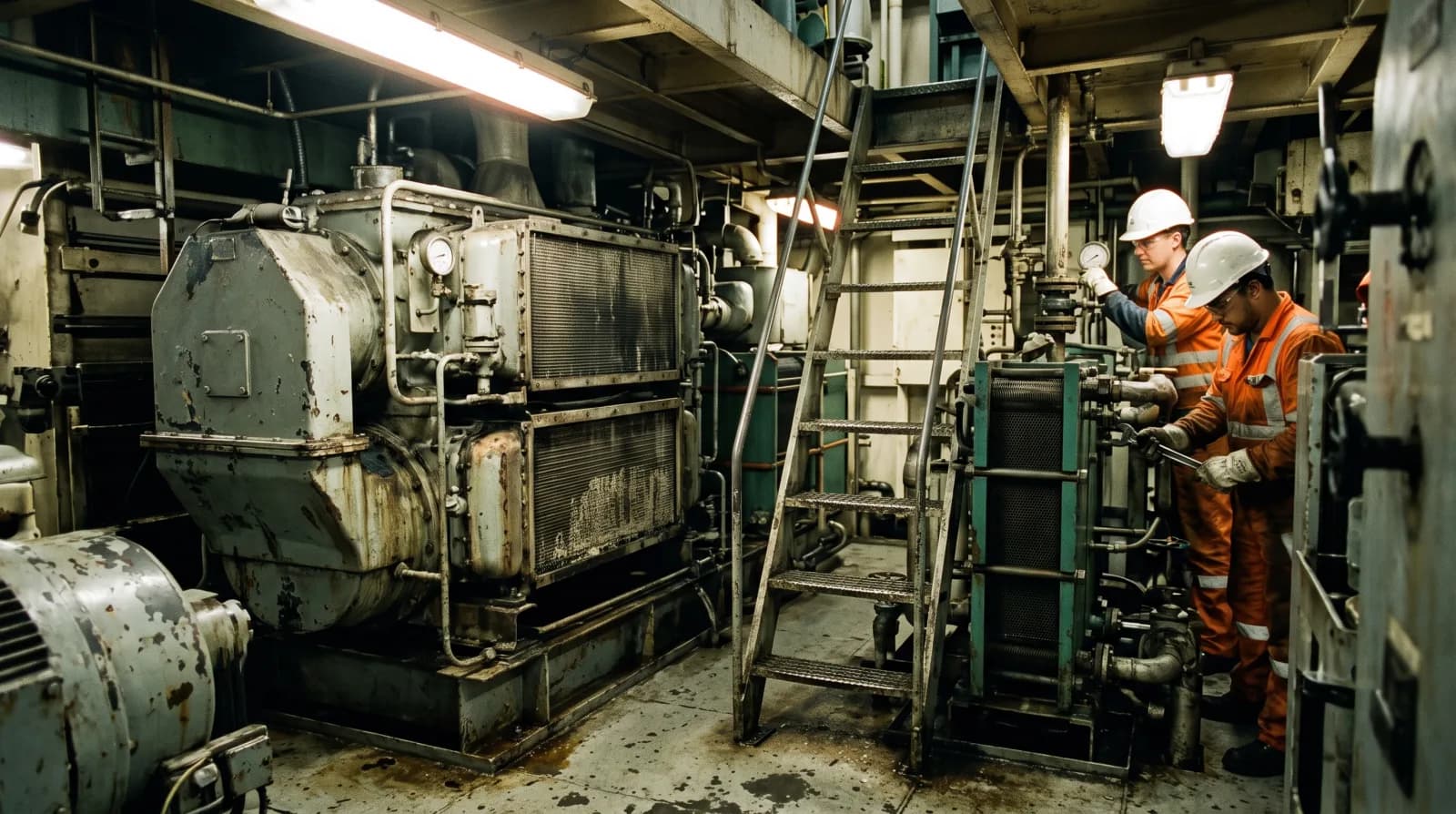
Charge air cooler repairs
Charge air cooler repairs clear fouled air sides and stop water reaching the engine. Send the nameplate and what has happened, and a specialist who works on that type will come back to you. Coverage is UK wide.
Tell us about your charge air cooler repairs
Five answers, all from memory. The detail comes next, and it is optional.
See the privacy notice for how these details are handled.
Common air cooler problems
It is no longer cooling
Blocked airways, bent or fouled fins, and air flow that has fallen away.
Cleaning options →LeakingA tube or header is leaking
Leaks at the tubes, the header box or the plugs, often after thermal cycling.
Repair options →PlannedA service or shutdown is coming
Planned work, an outage window, or a unit nobody has opened for some time.
Servicing options →UnsureNot sure what is wrong
Send the nameplate and what you have noticed. That is enough to get an answer.
Send the details →What goes wrong with charge air coolers
Charge air cooler repairs cover intercoolers on engines and generator sets, where air side fouling raises charge temperature and a water side leak puts water where the engine least wants it.
- Air side oil fouling. Oil mist carried over from the turbocharger, mixed with dust, coating the fins into a sticky deposit. Air side fouling raises charge air temperature, cuts density and puts exhaust temperatures up across the engine.
- Water side scaling and corrosion. Seawater, raw water or a poorly maintained closed circuit attacking the tubes from inside. In marine service this is the usual reason for tube failure.
- Tube leaks into the air side. The failure that matters most, because it puts water into the charge air and then into the cylinders. Water in the air receiver after a shutdown is the classic symptom and is worth acting on immediately.
- End cover and gasket failure. Corroded water boxes and perished gaskets leaking externally. Less serious, and often the first sign that the water side is in poorer condition than assumed.
- Fin damage. Flattened or eroded fins from over-aggressive cleaning, which permanently reduces the air side surface.
Charge air cooler repair options
- Immersion clean the air side
- The cooler is removed and soaked in a chemical bath to lift oil and deposit out of the fin block. In service washing helps between overhauls but does not reach the whole block.
- Clean and inspect the water side
- Descaling and mechanical cleaning of the tubes, followed by inspection, since the water side is usually where the failure originates.
- Pressure test
- Both circuits tested separately. A pressure test on each side proves there is no path from water side to air side, which is the whole point of the repair.
- Plug or replace tubes, or renew the stack
- Individual tubes can be plugged. Where corrosion is general, the tube stack is replaced rather than repaired, and on some units that is effectively a new cooler.
What to check before a charge air cooler repair
- Water in the air receiver or drains after shutdown is a tube leak until proven otherwise, and running on regardless risks the engine rather than the cooler
- Rising charge air temperature and rising exhaust temperatures across all cylinders usually mean fouling rather than a combustion problem
- Cleaning in service reaches the face of the block, not the middle of it, so a cooler that has been washed regularly can still be heavily fouled internally
- Seawater cooled units live a much harder life than closed circuit ones, and inspection intervals should reflect that rather than copying a shore standard
Charge air cooler repairs questions
How do I know the charge air cooler is fouled?
Charge air temperature after the cooler, compared against the cooling water inlet temperature. As the difference widens, the cooler is fouling. Exhaust temperatures climbing across every cylinder points the same way, and both show up well before anything fails.
There is water in the air receiver. What does that mean?
Most likely a tube leak putting cooling water into the charge air, and it needs investigating before the engine runs on. Condensation in humid conditions produces the same symptom, so a pressure test settles which of the two it is.
Can a charge air cooler be cleaned in place?
In service washing systems help keep the air side down between overhauls, and they are worth using. In situ methods do not replace removing the cooler and immersion cleaning it, because they do not reach the whole fin block.