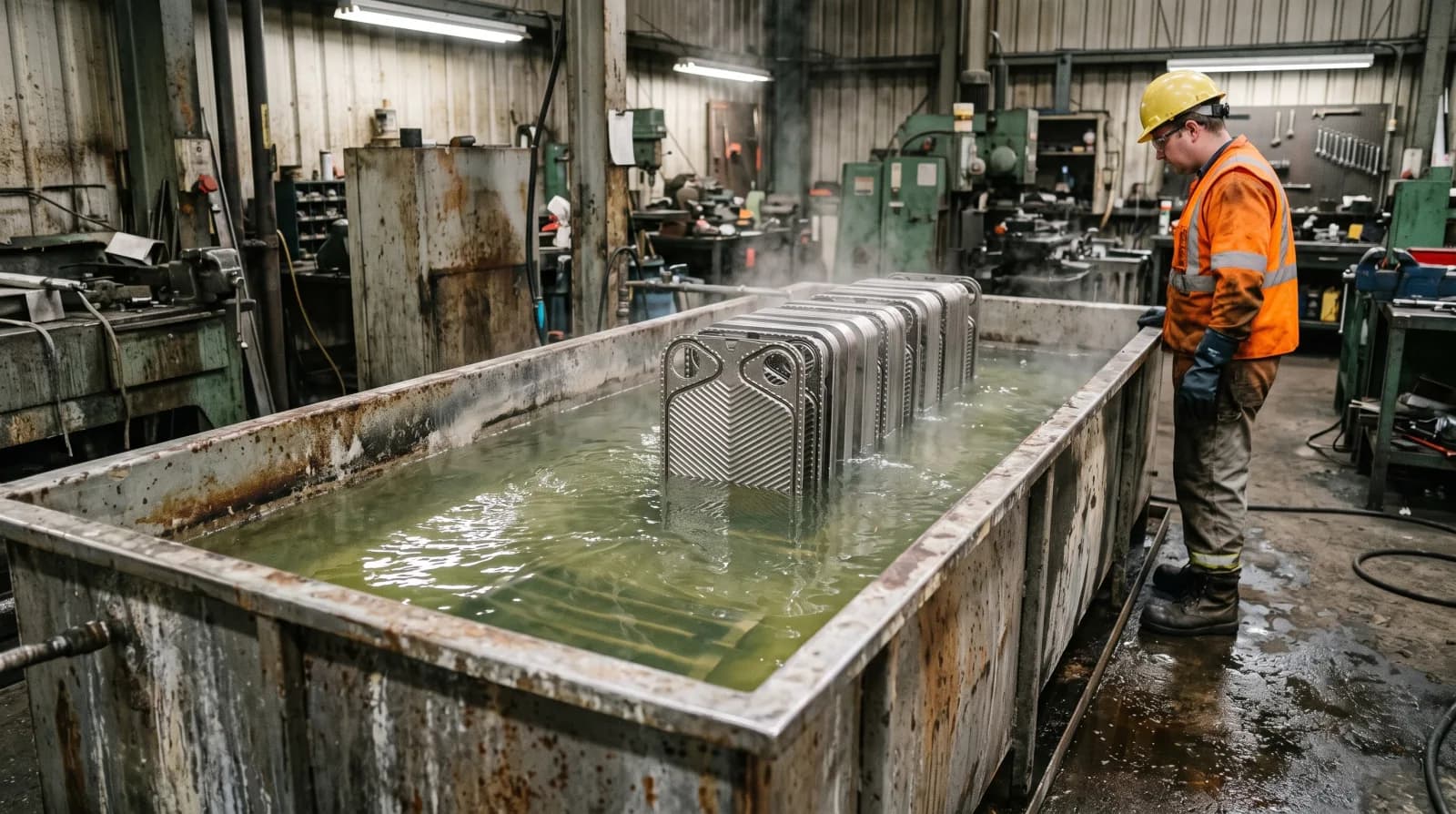
Common heat exchanger problems
Common heat exchanger problems start with a leak, a blockage or lost duty. Every page below explains what the work covers and what to send with an enquiry.
Tell us about your heat exchanger problem
Five answers, all from memory. The detail comes next, and it is optional.
See the privacy notice for how these details are handled.
All common heat exchanger problems
Heat exchanger leaking
Heat exchanger leaking means a failed gasket, a cracked plate or a split tube. The cause decides the fix, and it is rarely obvious from outside. Send the nameplate and what you have noticed, and a specialist will come back to you.
Read more →Blocked heat exchanger
Blocked heat exchanger restricts flow and drives the pressure drop up. The cause decides the fix, and it is rarely obvious from outside. Send the nameplate and what you have noticed, and a specialist will come back to you.
Read more →Heat exchanger not performing
Heat exchanger not performing misses the temperatures it was sized to reach. The cause decides the fix, and it is rarely obvious from outside. Send the nameplate and what you have noticed, and a specialist will come back to you.
Read more →Heat exchanger fouling
Heat exchanger fouling is the layer of deposit that builds on the heat transfer surface, and it costs duty and pressure drop long before it causes a failure.
Read more →Heat exchanger corrosion
Heat exchanger corrosion thins the metal that separates the two fluids, so unlike fouling it does not just cost performance, it eventually causes a leak.
Read more →Heat exchanger gasket failure
Heat exchanger gasket failure is the most common cause of a leaking plate unit, and it is usually the seal that has aged rather than anything wrong with the plates.
Read more →