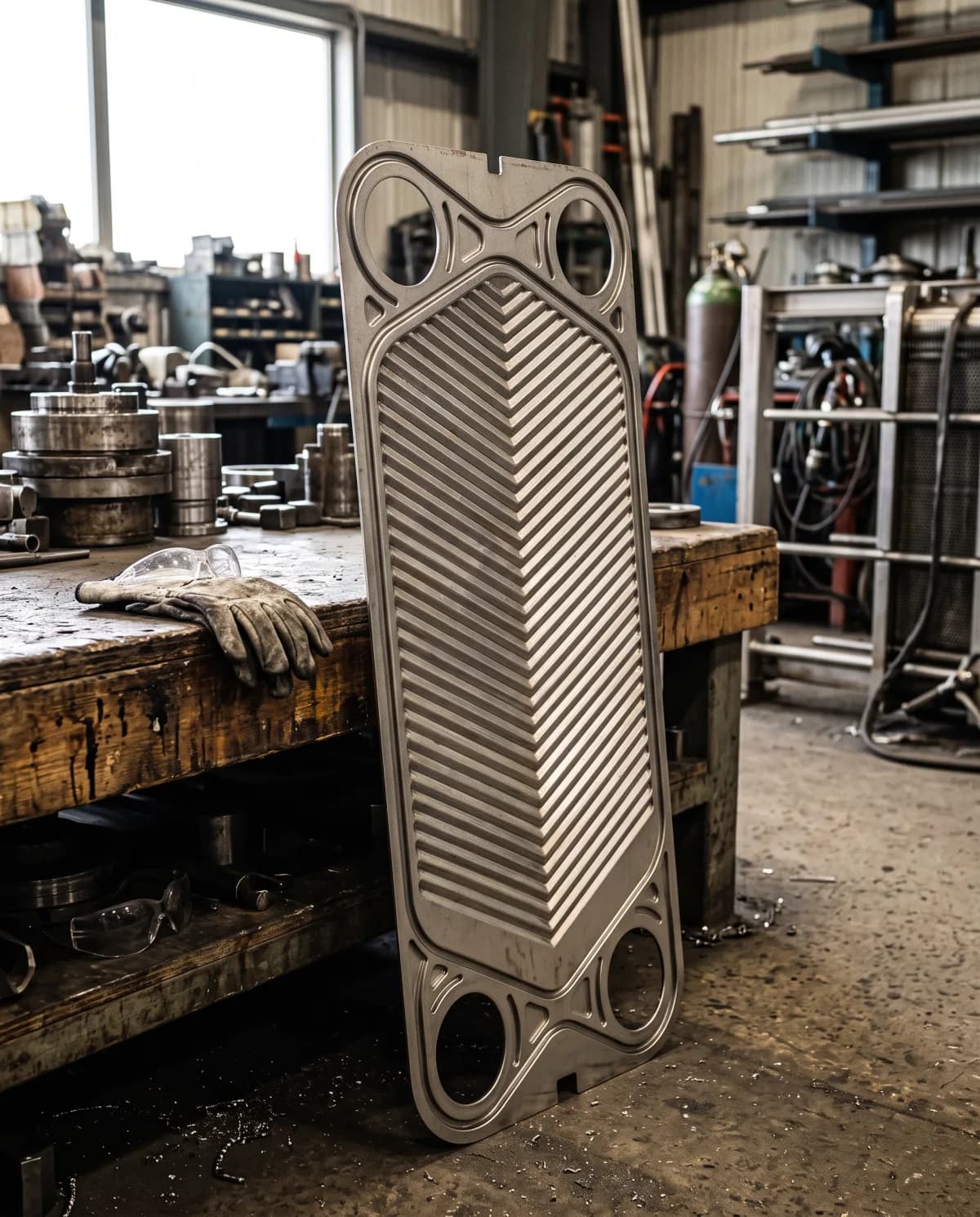
Heat exchanger replacement
Heat exchanger replacement swaps a worn out unit for one that suits the duty. Send the nameplate and what has happened, and a specialist who works on that type will come back to you. Coverage is UK wide.
Tell us about your heat exchanger replacement
Five answers, all from memory. The detail comes next, and it is optional.
See the privacy notice for how these details are handled.
Common problems that need heat exchanger replacement
It has failed or is leaking
Fluids mixing, a leak at the unit, or one that will not hold pressure.
Emergency repair →Losing dutyPerformance has dropped
Higher pressure drop, a wider approach temperature, or a duty it no longer reaches.
Cleaning options →PlannedA service or shutdown is coming
Planned maintenance, an outage window, or a spare that needs to be ready.
Servicing options →UnsureNot sure what is wrong
Send the nameplate and what you have noticed. That is enough to get an answer.
Send the details →When replacement beats repair
Heat exchanger replacement is the right answer when the unit is beyond economical repair, not before. The shell or frame is the expensive part, so a repair usually wins while that part is sound. These are the cases where repair no longer wins.
- Corrosion of the shell, frame or channels rather than of the internals
- Enough plates or tubes failing inspection that the repair approaches the cost of a unit
- A model no longer supported, where plates or gaskets cannot be obtained
- A unit that has never suited its duty, so a repair returns it to a performance that was never enough
- Repeated failures on the same unit with no upstream cause that can be corrected
How a replacement is arranged
Establish the duty, not just the model
The old nameplate and the current operating conditions together. Replacing like for like is only right if the original was right, and plant often changes around an exchanger over its life.
Confirm the constraints
Space, connection sizes and positions, and how the unit gets in and out. Space, connections and access decide more replacement specifications than thermal duty does.
Remove the old unit
Isolation, drain down and removal, with disposal or recovery of the old unit as required.
Fit and commission
The replacement is fitted, connected, tested and put back into service, with the records the plant needs.
What affects a replacement
Repair economics first
A sound shell or frame is the expensive part of an exchanger, and keeping it is usually cheaper. Replacement makes sense once that part is the problem.
Lead time
A replacement unit is manufactured or supplied rather than sitting on a shelf, which is why an emergency is more often a repair than a replacement.
Access and connections
A unit that will not fit through the door, or that needs pipework moved, changes the job into a small project.
Whether the duty has changed
A replacement is the moment to correct an exchanger that was always undersized, and establishing that now costs far less than discovering it after installation.
Heat exchanger replacement questions
What is the lifespan of a heat exchanger?
There is no single figure. A unit on clean water at modest temperatures can run for decades; the same unit on an aggressive duty may not. Condition, measured by inspection, tells you far more than age does.
How do I know when a heat exchanger needs replacing?
When the pressure envelope itself is failing, when enough plates or tubes have failed that the repair approaches the cost of a unit, or when parts are no longer obtainable. All three are inspection findings rather than judgements from the outside.
Can you replace just the heat exchanger?
Usually yes, provided the duty, the connections and the space all work. It is worth confirming the replacement suits the duty the plant has now rather than the one it had when the original was specified.
When does replacement become the answer?
When the pressure envelope is the problem rather than the internals. Tubes and plates are renewable; a corroded shell, frame or channel generally is not. Parts that can no longer be obtained end a unit's life just as effectively, which is why availability is checked at the same time as condition.
Can a replacement be a different make from the original?
Often, provided the duty, the connections and the space all work. What matters is that the new unit does the job the plant needs now rather than matching a label.
What happens to the old unit?
The old unit is removed and either disposed of or recovered. Where it has any remaining value that is worth establishing before it is scrapped.