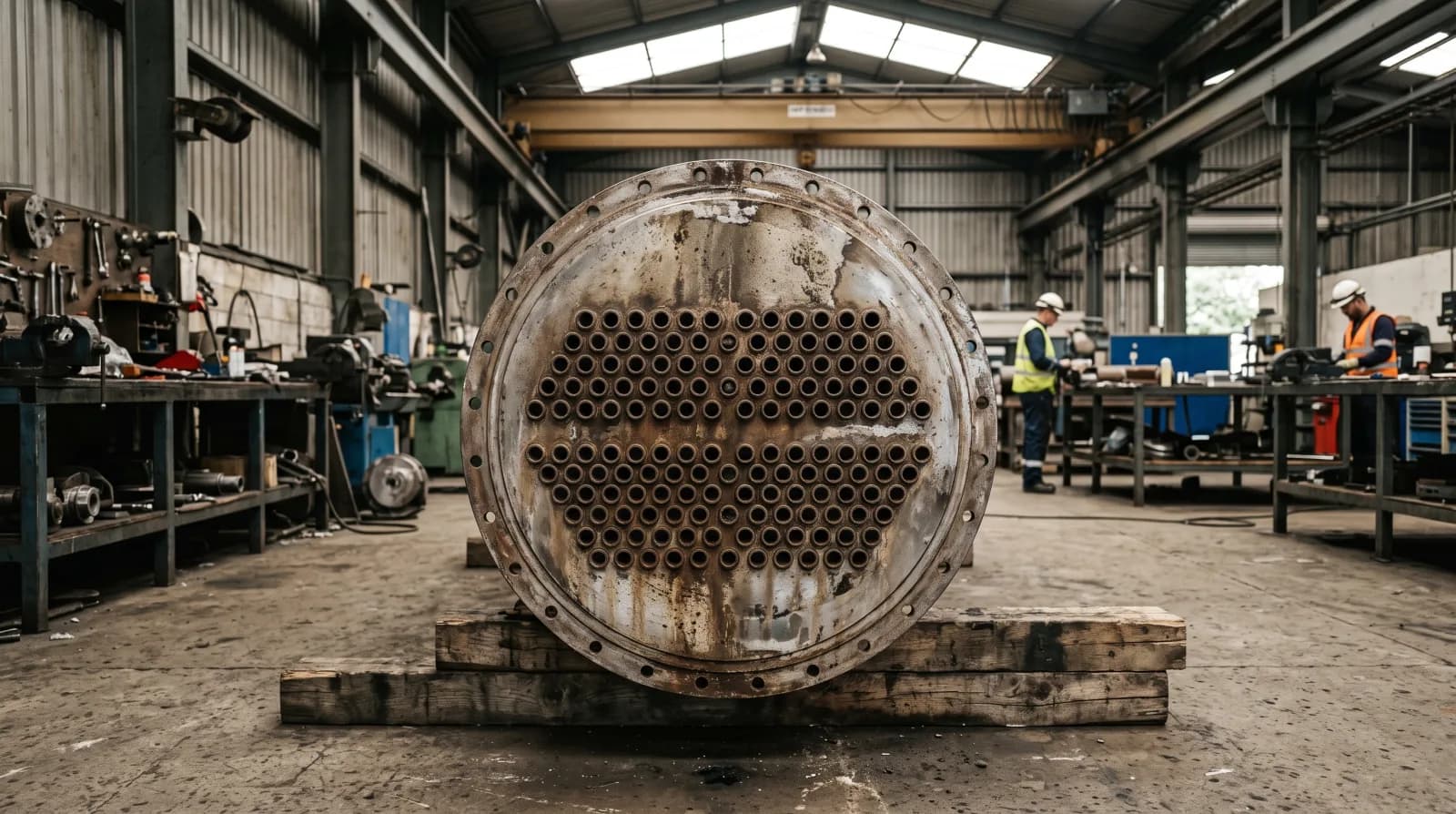
Tube plugging and tube repair
Heat exchanger tube plugging seals failed tubes so the unit runs again. Send the nameplate and what has happened, and a specialist who works on that type will come back to you. Coverage is UK wide.
Tell us about your heat exchanger tube plugging
Five answers, all from memory. The detail comes next, and it is optional.
See the privacy notice for how these details are handled.
Common shell and tube problems
Wall loss across the bundle
Repeat failures in different tubes, or a plugged tube count that keeps rising.
Retubing →Losing dutyFouled tubes and rising pressure drop
Deposit inside the tubes or around the bundle, costing duty at the same flow.
Cleaning options →Plant downIt has failed or is leaking
Fluids mixing, a leak at the unit, or one that will not hold pressure.
Emergency repair →UnsureNot sure what is wrong
Send the nameplate and what you have noticed. That is enough to get an answer.
Send the details →When heat exchanger tube plugging is used
Heat exchanger tube plugging takes failed tubes out of service so the unit can run again, without replacing the bundle. It suits a sound bundle with a small number of failures, and these are the situations where it is used.
- One tube, or a few, leaking in a bundle that is otherwise sound
- Cross contamination between the shell and tube sides that has to be stopped now, not next shutdown
- A failure mid campaign, where the unit has to run until the planned outage
- Pressure test failure traced to specific tubes rather than to the joints or the shell
The tube plugging process
Send the details
The unit, how many tubes are affected if you know, and whether the plant is running. Two minutes, and it decides the approach.
Find the failed tubes
Pressure testing with the channel open shows which tubes are leaking. Where a leak is small or intermittent it is located properly rather than by elimination.
Plug them
Both ends of each failed tube are sealed. Plug type is matched to the pressure, the temperature and the tube material.
Retest and record
The unit is retested and the plugged tubes recorded on a tubesheet map, which is what shows whether failures are spreading.
What affects a tube plugging repair
How much duty you can afford to lose
Every plugged tube removes surface area. Whether that matters depends on the margin the exchanger was built with, which is why the useful measure is the performance you are still getting rather than a percentage.
Where the failures are
Failures clustered at the inlet end usually point at erosion or impingement. Failures spread across the bundle point at general corrosion, and that is a retube conversation rather than a plugging one.
Plug type against duty
A tapered plug holds by friction alone, so it does not suit a high pressure duty. The plug has to suit the pressure, the temperature and the tube material, and stainless plugs in a brass tubesheet raise a galvanic problem of their own. ASME PCC-2 is the reference point for exchanger tube repair, and it is worth the plant having a view on which method it accepts.
Sleeving as an alternative
Where damage is local and near the tube end, a sleeve can keep the tube in service instead of retiring it. It suits inlet end erosion in particular, and it is not a fix for a tube that has thinned along its length.
Heat exchanger tube plugging questions
How long does a plugged tube last?
A correctly fitted plug in a sound tube end is a permanent repair, not a temporary one. What is temporary is the situation around it: the reason that tube failed is usually still acting on the tubes next to it.
Can you plug tubes without removing the bundle?
Yes. Plugging is done through the open channel with the bundle in place, which is why it suits a mid campaign failure. It is also why plugging tells you nothing about the condition of the rest of the bundle.
Should both ends be plugged?
Yes. A tube sealed at one end still fills, and stagnant fluid in a dead tube corrodes it from the inside and can put the tubes around it at risk.