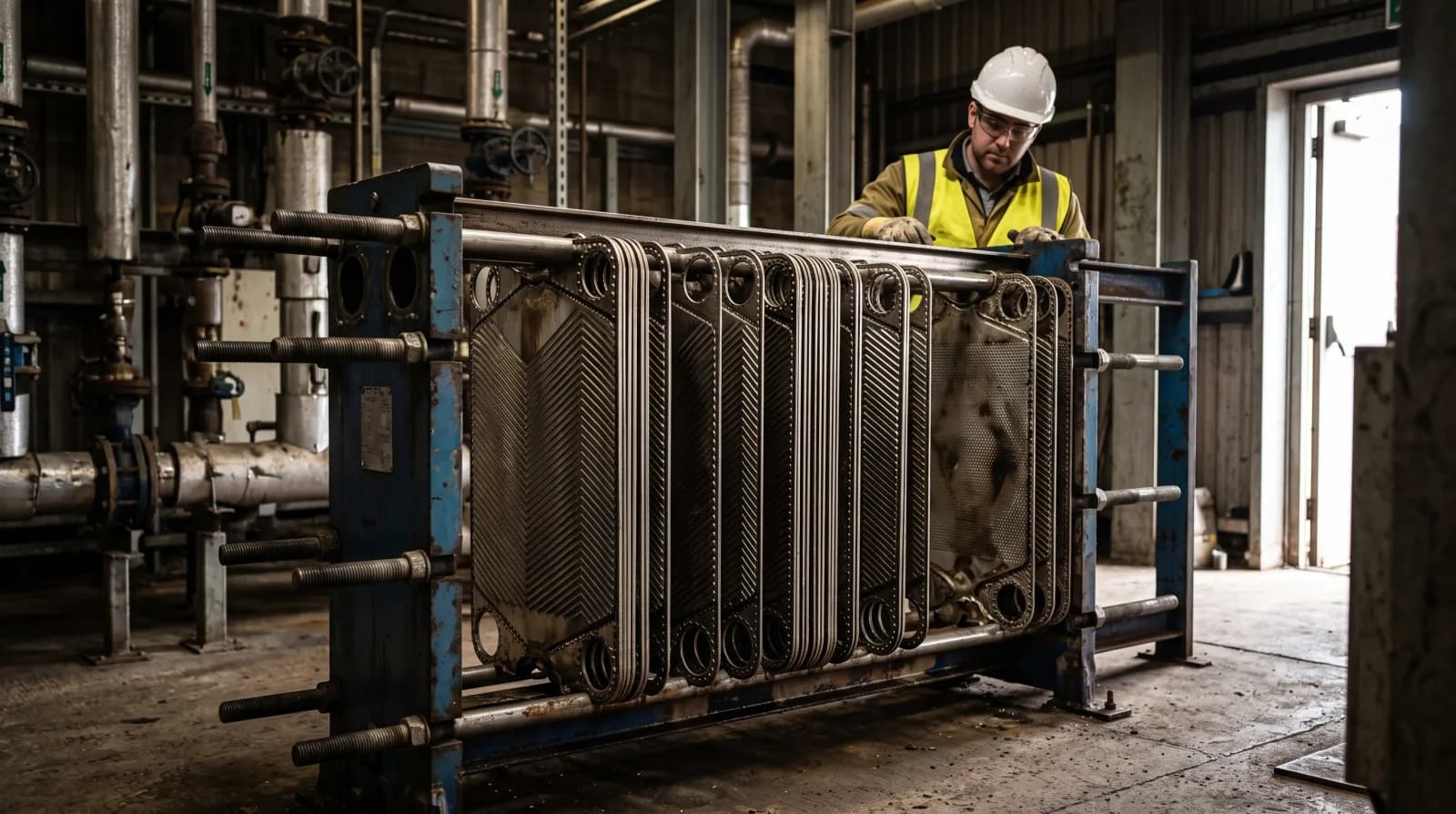
Heat exchanger repairs
Heat exchanger repairs cover plate packs, tube bundles, coolers and condensers on industrial sites across the UK. Send the nameplate and what has happened, and a specialist who works on that type will come back to you. Coverage is UK wide.
Tell us about your repair or service
Five answers, all from memory. The detail comes next, and it is optional.
See the privacy notice for how these details are handled.
Common heat exchanger problems
It has failed or is leaking
Fluids mixing, a leak at the pack, or a unit that will not hold pressure.
Repair options →Losing dutyPerformance has dropped
Higher pressure drop, a wider approach temperature, or a duty it no longer reaches.
Cleaning options →PlannedA service or shutdown is coming
Planned maintenance, an outage window, or a spare that needs to be ready.
Servicing options →UnsureNot sure what is wrong
Send the nameplate and what you have noticed. That is enough to get an answer.
Send the details →Heat exchangers we cover for repair and service
If your unit is here, we can put you in touch with a specialist who works on it. If it is not, send the details anyway and it will be checked.
Plate heat exchangers
Plate and frame units, pasteurisers and product coolers.
Repairs →TubularShell and tube
U-tube, floating head and fixed tubesheet units, tube bundles and oil coolers.
Repairs →Finned tubeAir-cooled and finned coil
Air blast coolers, fin fan units, finned coils and battery coils.
Repairs →Building servicesCalorifiers
Stored hot water calorifiers and heating vessels.
Repairs →Engine and gensetCharge air coolers
Charge air coolers and intercoolers on engines and generator sets.
Repairs →Power and processCondensers
Surface condensers, steam condensers and auxiliary coolers.
Repairs →The nameplate will tell us
Make, model, serial number and the design conditions are on the plate fixed to the unit. A photograph of it is the quickest way to get an accurate answer.
Heat exchanger repair services
Start with whatever has gone wrong. Each page explains what the work covers and what to send so you get a straight answer.
Plate heat exchanger cleaning
For a unit that is no longer reaching its duty.
PlatePlate heat exchanger repairs
For a pack that is leaking, mixing fluids or losing pressure.
PlatePlate heat exchanger servicing
Planned work on a unit that has not failed.
PlateRegasketing
Gasket replacement when the seal, not the plate, has failed.
TubularRetubing
Full tube bundle replacement.
TubularTube plugging
Failed tubes taken out of service so the unit can run.
All unitsRefurbishment
Strip, clean, inspect, repair and test as one job.
All unitsInspection and NDT
Establishing the condition of a unit before a decision.
All unitsLeak and pressure testing
Proving a unit before it returns to service.
All unitsHeat exchanger cleaning
Cleaning for tubular units and bundles.
Heat exchanger repairs by industry
What fouls a unit, how it fails and when you can get at it all differ by industry. Find yours below.
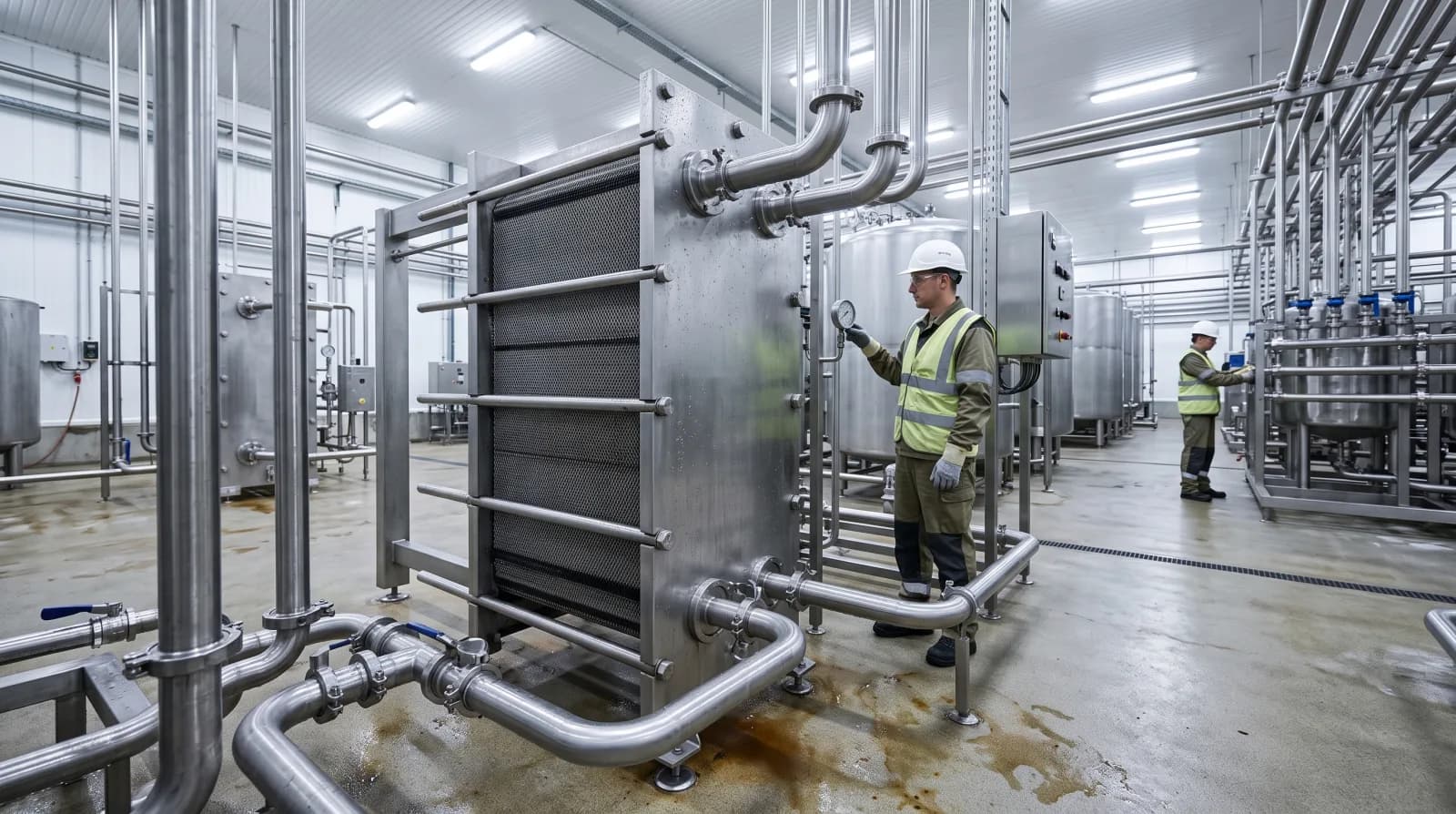 Food and drinkFood and drink processingPasteurisers, product coolers and hygiene requirements that shape the work.
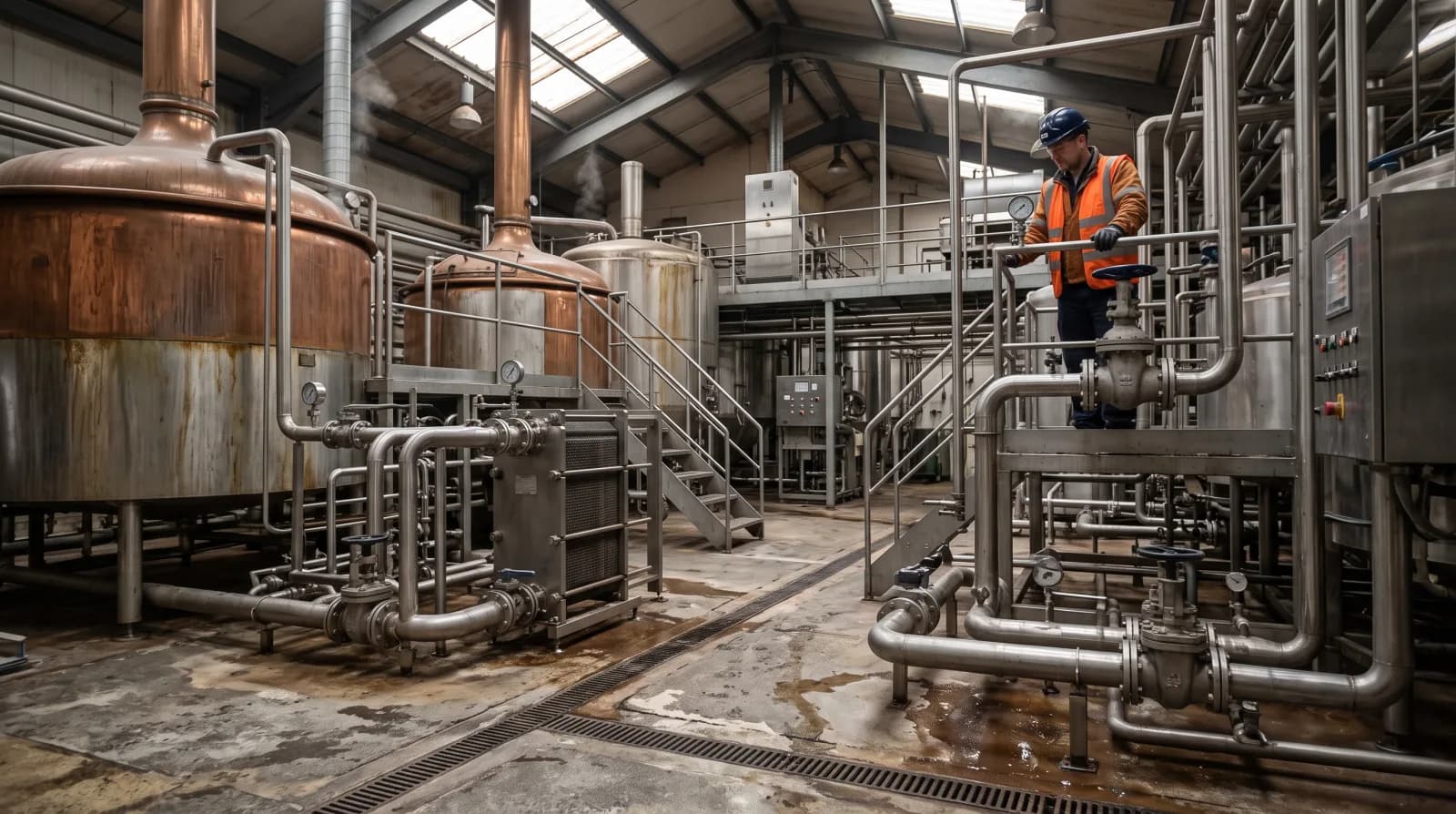 BrewingBrewing and distillingWort coolers, heat recovery, and work planned around the production calendar.
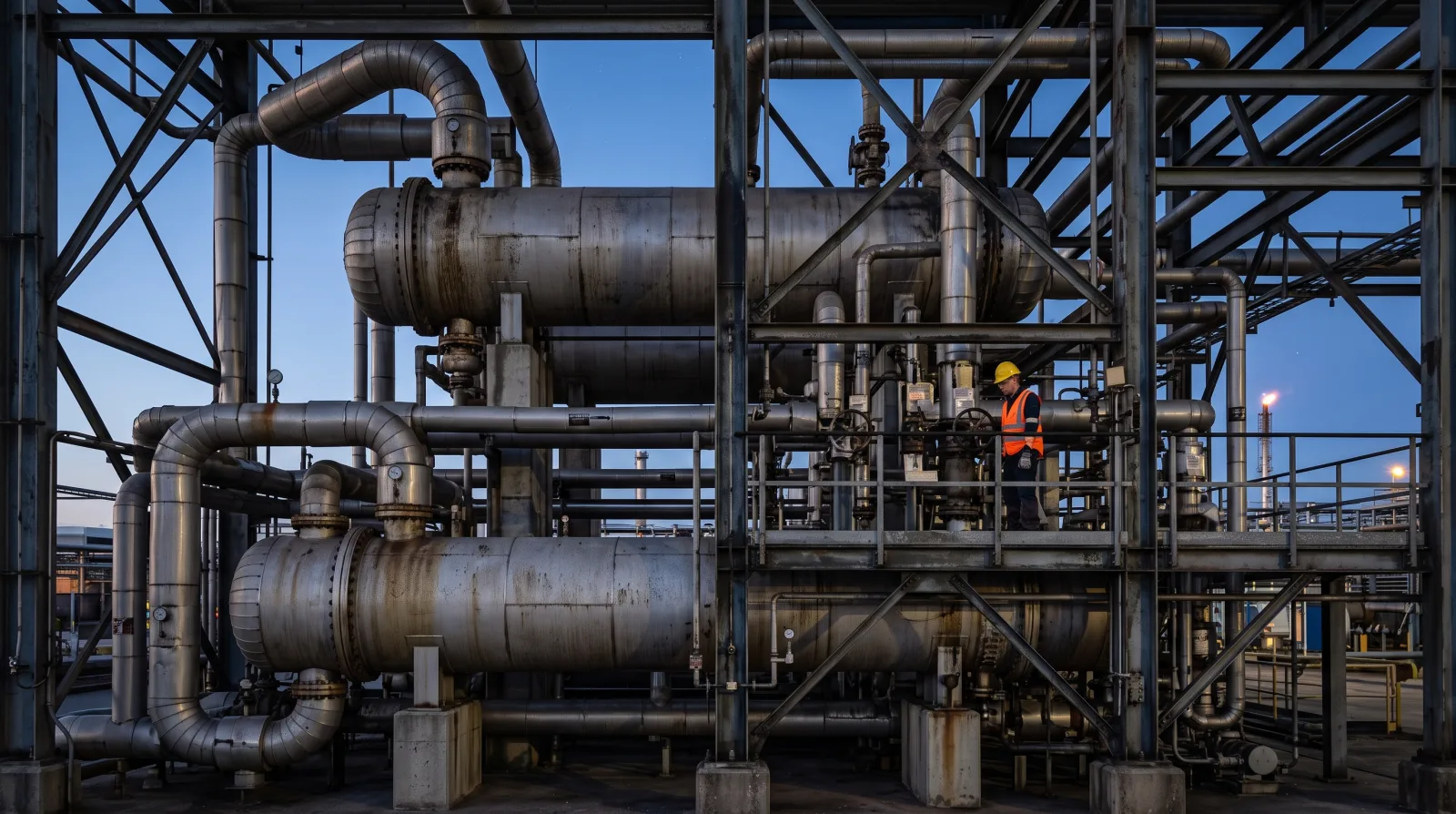 Oil and gasOil, gas and refiningProcess units, and work fixed to a turnaround window that cannot move.
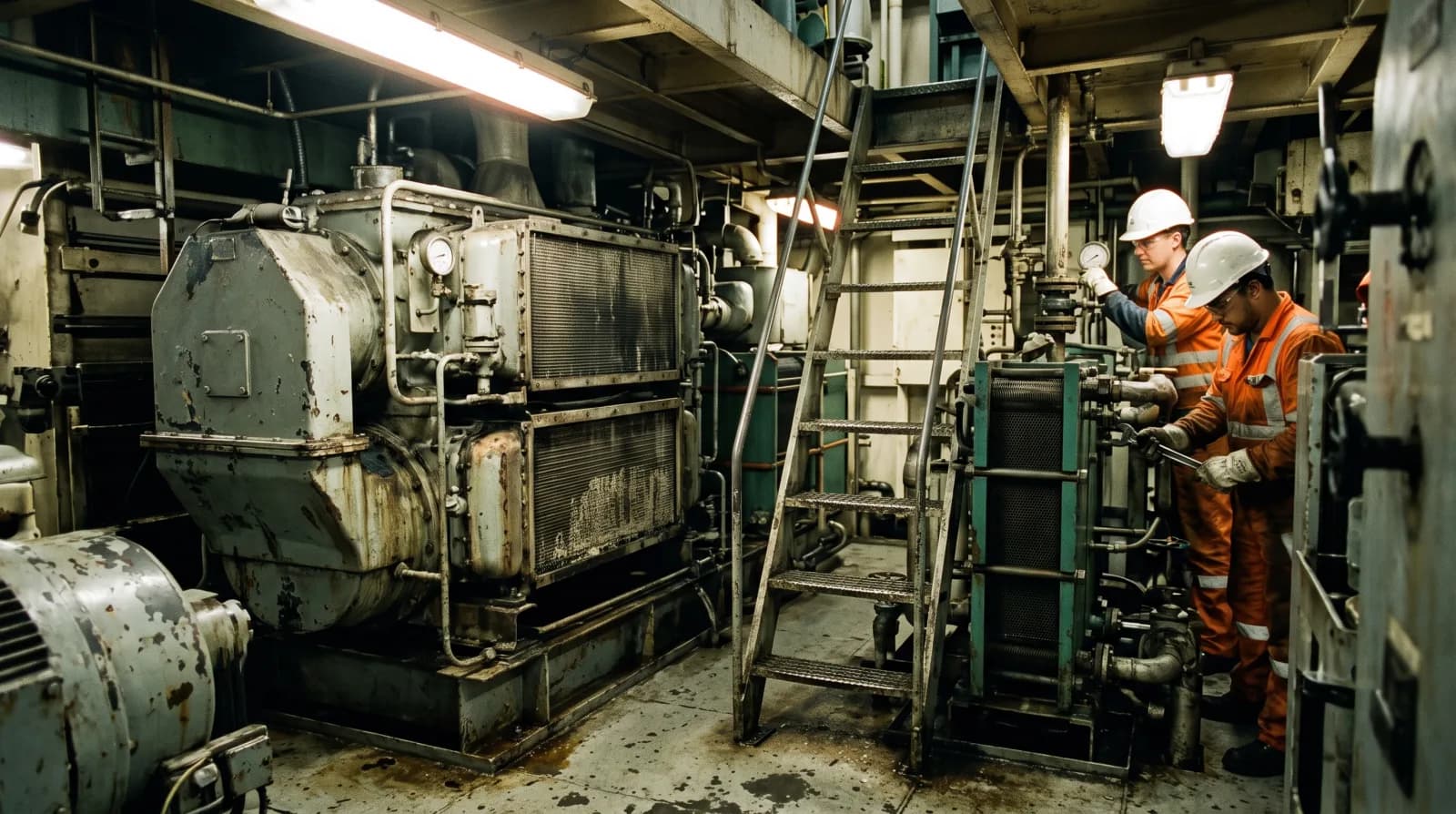 MarineMarine and shippingSeawater cooled units, charge air coolers, and the time alongside.
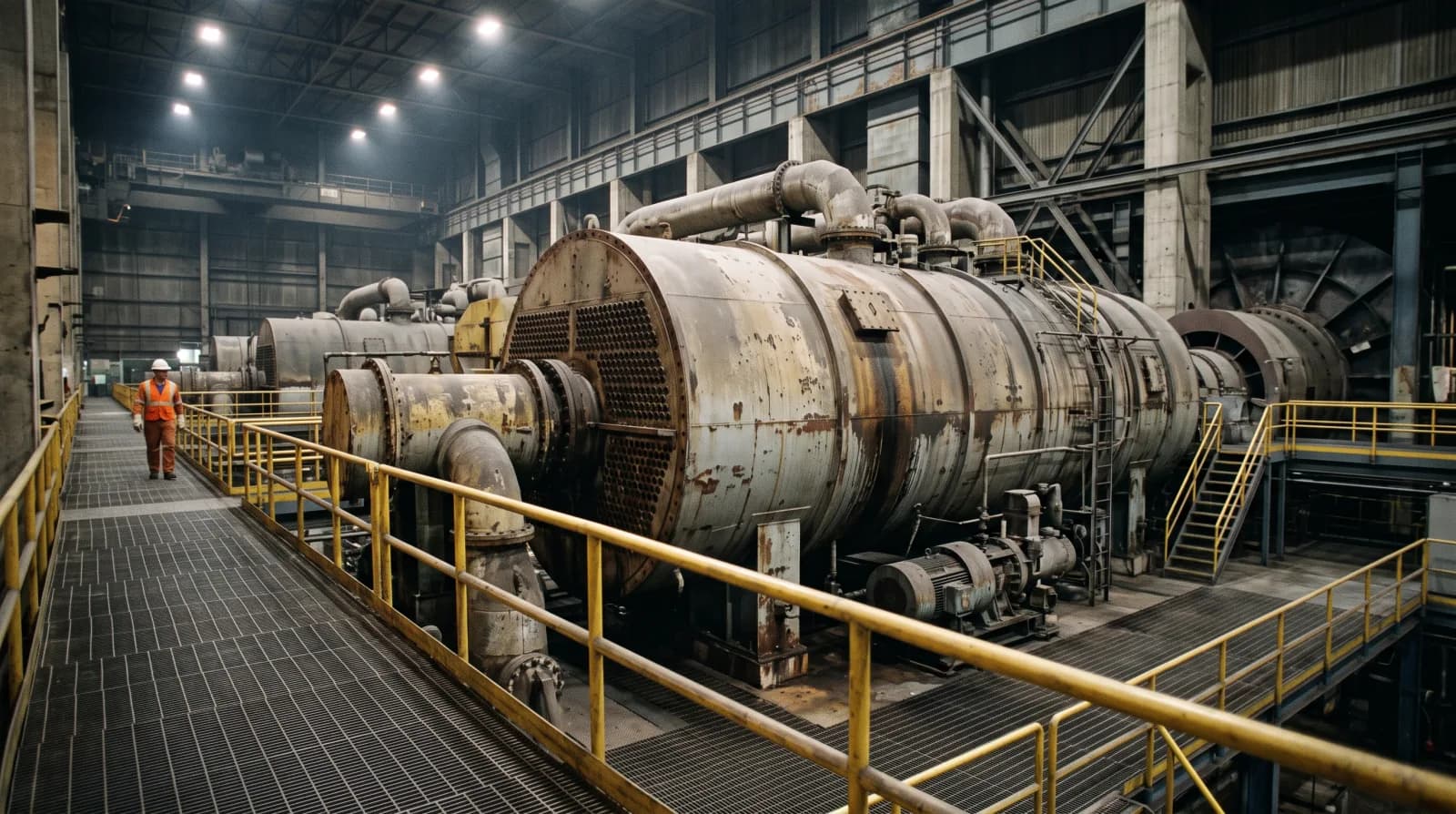 PowerPower generationCondensers and auxiliary coolers, with outages setting the programme.
Heat exchanger repair FAQs
How much does a heat exchanger repair cost?
It depends on the unit and on what the assessment finds, so no price is published here. A leaking gasket and a cracked plate look the same from outside and are very different jobs. What can be established early is the cost of the assessment itself.
How long does a heat exchanger repair take?
That also follows the assessment, because it depends on the scope and on parts availability. Any duration offered before the unit has been looked at is an estimate.
Can the repair be done on site?
Some work can be done in place where there is access. Other work needs a workshop. Which applies is one of the things the assessment settles.
What information do you need from me?
The nameplate above all, then what has happened and how you know, and whether the plant is running or down. Those three answers are usually enough to get moving.
Do you cover my area?
Yes. Specialists are available for industrial sites across the UK, so there is no catchment area to fall outside of. The town or postcode on the enquiry is used to find one near the plant.
How does this work?
Send the details of the unit and what has happened. Those details go to a specialist who works on that type of heat exchanger, and they arrange an assessment before quoting. There is no charge for the introduction.
Is it worth repairing, or should the unit be replaced?
Usually worth repairing where the shell or frame is sound, since that is the expensive part and it is being kept. It stops being true once the pressure envelope itself needs significant work, and that is a question for the assessment.
Send an enquiry
Five answers to start, and the detail after. The enquiry is sent as soon as you have given the first five, so nothing is lost if you stop there.
What to copy off it
Make, model and serial number, design pressure and temperature, test pressure and year of manufacture. A photograph of the plate is quicker than typing it out.
Tell us about your repair or service
Five answers, all from memory. The detail comes next, and it is optional.
See the privacy notice for how these details are handled.