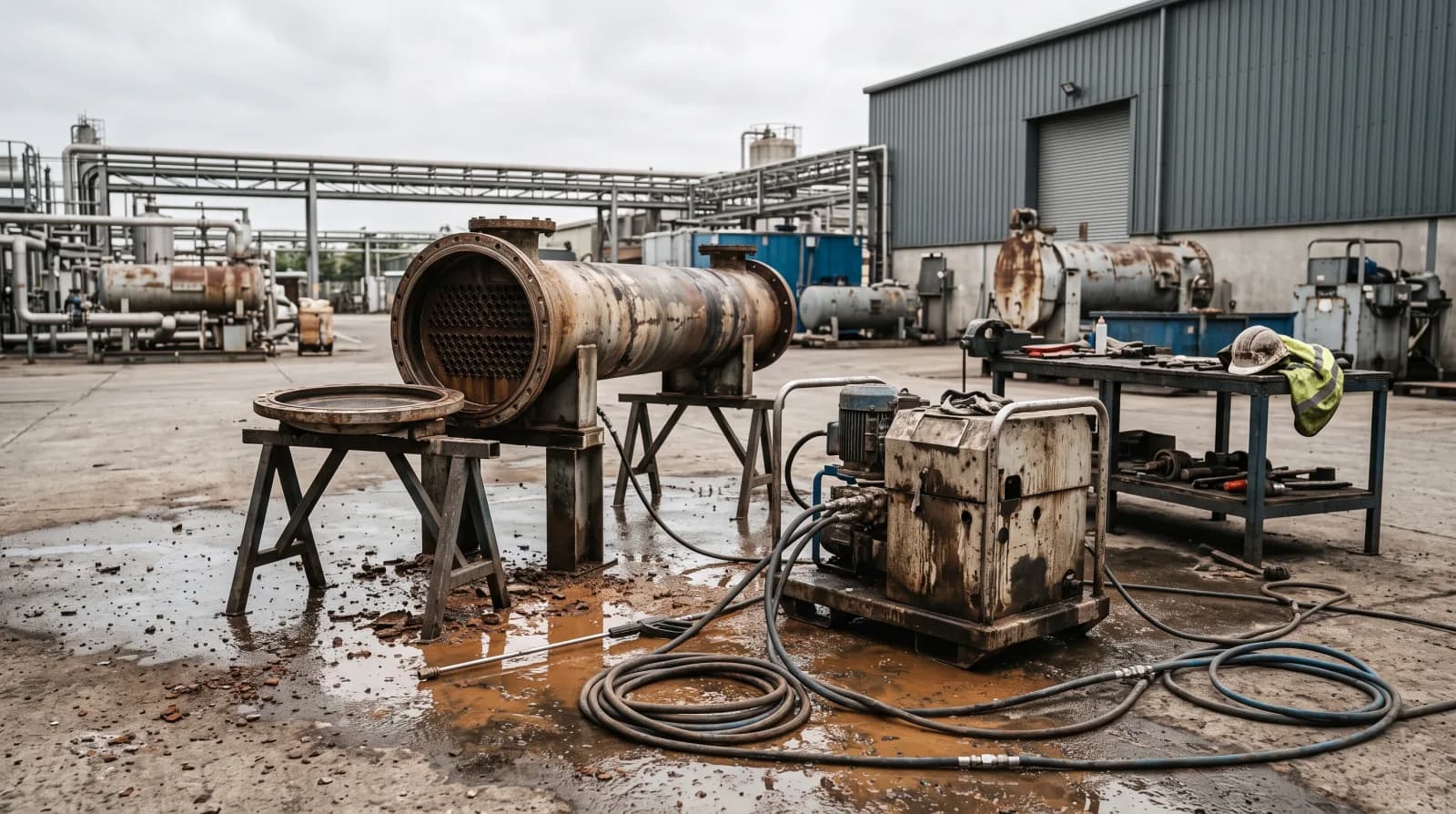
Heat exchanger cleaning
Heat exchanger cleaning removes the fouling that has taken your duty away. Send the nameplate and what has happened, and a specialist who works on that type will come back to you. Coverage is UK wide.
Tell us about your heat exchanger cleaning
Five answers, all from memory. The detail comes next, and it is optional.
See the privacy notice for how these details are handled.
Common problems that need heat exchanger cleaning
It has failed or is leaking
Fluids mixing, a leak at the unit, or one that will not hold pressure.
Emergency repair →PlannedA service or shutdown is coming
Planned maintenance, an outage window, or a spare that needs to be ready.
Servicing options →UnsureNot sure what is wrong
Send the nameplate and what you have noticed. That is enough to get an answer.
Send the details →Signs a heat exchanger needs cleaning
Heat exchanger cleaning removes the fouling that is costing you duty, and it often removes the need for a repair as well. Cleaning also has to come first if anything is going to be inspected properly. These are the signs a clean is due.
- Approach temperature widening: the unit is no longer achieving the duty it used to
- Pressure drop climbing across the exchanger
- Flow falling with the pump unchanged
- Downstream equipment working harder, or a chiller running longer, to make up the shortfall
- Deposits found at the last inspection that have not been dealt with since
Heat exchanger cleaning methods
Send the details
The unit, the fluids and what has changed. The deposit decides the method, and the fluids decide what is safe.
Identify the deposit
Scale, biofilm, corrosion product and process deposit all need different treatment. Cleaning before identifying is how surfaces get damaged and how fouling returns.
Clean in place, or strip it
In situ cleaning avoids downtime and cannot inspect anything. A strip clean reaches more and is the only route that also establishes condition.
Prove it worked
The check is whether pressure drop and approach temperature have come back, not whether the unit looks clean.
Choosing a cleaning method
In situ or removed
In situ cleaning avoids the strip down and suits routine fouling. Cleaning in place also inspects nothing, so a unit cleaned that way returns to service with its condition unknown.
Tube and plate material
Chemistry that is safe on stainless can attack brass or aluminium, and jetting pressure that suits a steel tube can damage a thin walled one. The method follows the material.
Food, pharmaceutical and potable duties
Where the exchanger touches product or drinking water, the cleaning method, the chemistry and the rinse all have to leave it fit to return to that duty. A food or potable duty constrains the chemistry genuinely, not nominally.
Why it fouled
Cleaning treats the symptom. If the water treatment, the velocity or the temperature profile caused it, the deposit returns on the same schedule as before, and the cleaning interval is the clue.
Heat exchanger cleaning questions
How often should a heat exchanger be cleaned?
On condition rather than on a calendar. Monitoring approach temperature and pressure drop tells you when fouling is costing more than the clean would, which is a better trigger than a fixed interval that is either too often or too late.
Chemical cleaning or hydrojetting?
The deposit, the tube material and the effluent route decide it. Chemical suits scale and reaches the whole surface; jetting suits hard deposits and avoids chemistry altogether. Sometimes it is both, in that order.
Can cleaning damage the tubes?
Yes, if the method does not match the material. Wrong chemistry attacks the tube wall, and excessive jetting pressure can damage thin walled or already thinned tubes. Knowing the condition of the bundle first is what prevents that.
Will cleaning fix a leak?
No. Cleaning restores performance. A leak is a tube, plate or joint failure and needs a repair, though a clean is often what makes the failure visible in the first place.