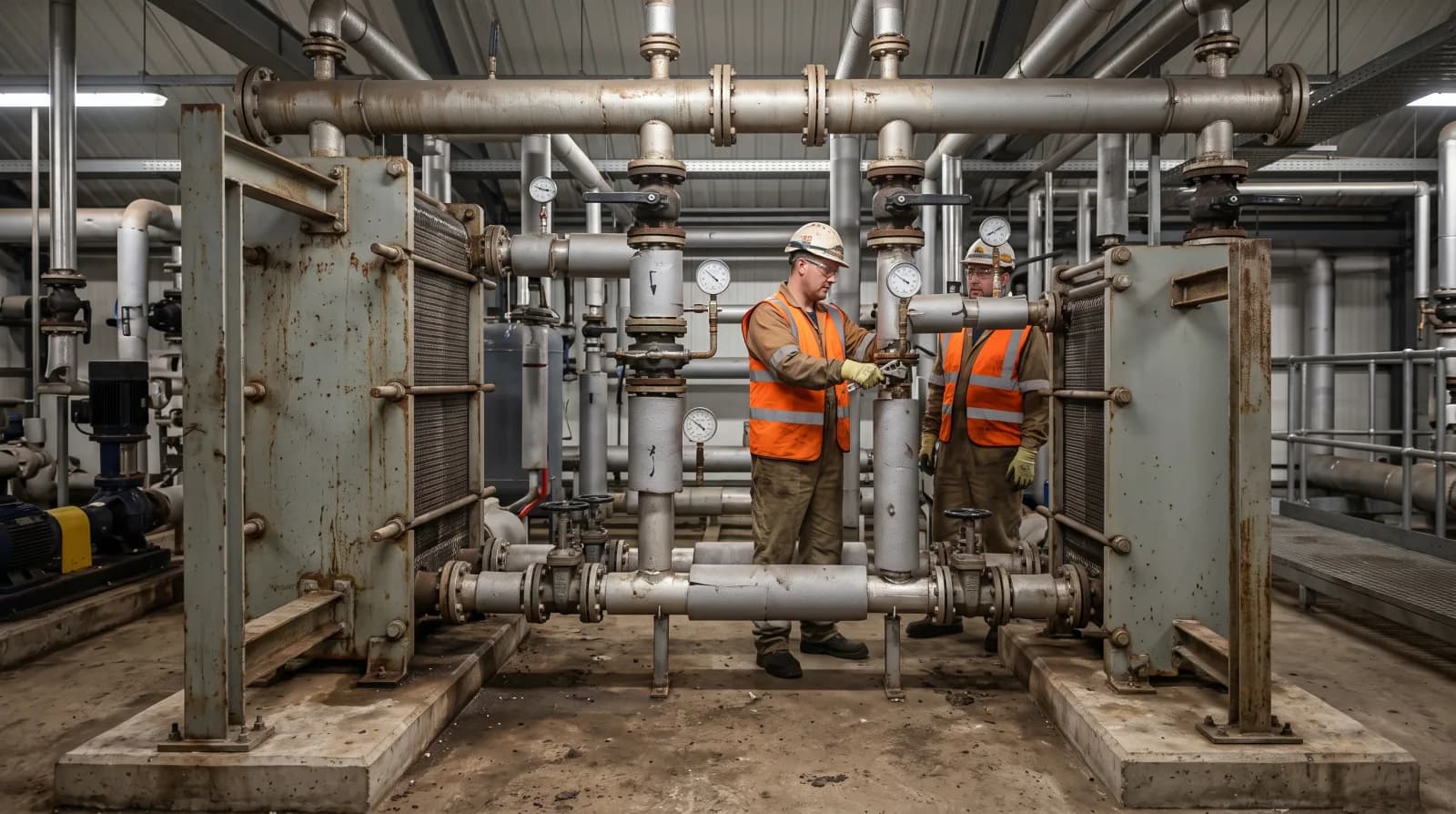
Heat exchanger not performing
Heat exchanger not performing misses the temperatures it was sized to reach. The cause decides the fix, and it is rarely obvious from outside. Send the nameplate and what you have noticed, and a specialist will come back to you.
Tell us about your heat exchanger not performing
Five answers, all from memory. The detail comes next, and it is optional.
See the privacy notice for how these details are handled.
Why a heat exchanger loses performance
A heat exchanger not performing is failing to reach the temperatures it was sized for. In most cases the cause is fouling rather than a fault with the unit, and the numbers separate the two before anything is opened.
- Fouling on either surface
- The most common cause by a distance. A deposit layer insulates the surface, so the unit transfers less heat while everything else looks normal.
- Plugged tubes
- Every plugged tube removes surface area. Whether that matters depends on the margin the exchanger was built with, which is why the useful measure is the duty you are still getting.
- Flow that has changed
- A worn pump, a partly closed valve or a modified system can starve the unit. Worth ruling out before the exchanger is blamed.
- A changed duty
- Plant that has been uprated or repurposed sometimes asks an exchanger for more than it was sized to give. No repair fixes that, and it is better to know before the work than after.
- Air or gas in the circuit
- Trapped air reduces the effective surface. Common after maintenance and easy to overlook.
How to measure what you are losing
- Record inlet and outlet temperatures on both sides, which is what gives you the approach temperature
- Record the pressure drop across the unit and compare it with the clean figure
- Note the flow rates if they are measured, since a performance loss with a falling flow points somewhere different from one at full flow
- Compare against the original datasheet if it exists, because it states what the unit was designed to do
Heat exchanger not performing questions
What are the symptoms of a damaged heat exchanger?
Falling duty, rising pressure drop, fluid appearing where it should not be, and make-up water consumption climbing with no visible leak. The first two usually mean fouling, the second two usually mean a failure.
How do I know whether it is fouling or a fault?
Fouling usually shows as a gradual loss with a rising pressure drop. A sudden change, or a loss with no pressure drop change, points elsewhere. The numbers separate the two.
Is it worth cleaning or should the unit be replaced?
Cleaning first, in almost every case. Cleaning is cheaper and quicker, and it reveals the condition of the surfaces, which is what a replacement decision should rest on.
What if it still underperforms after cleaning?
Then the cause is not deposit, and the next questions are the flow, the plugged tube count and whether the duty being asked of it has changed since it was specified.