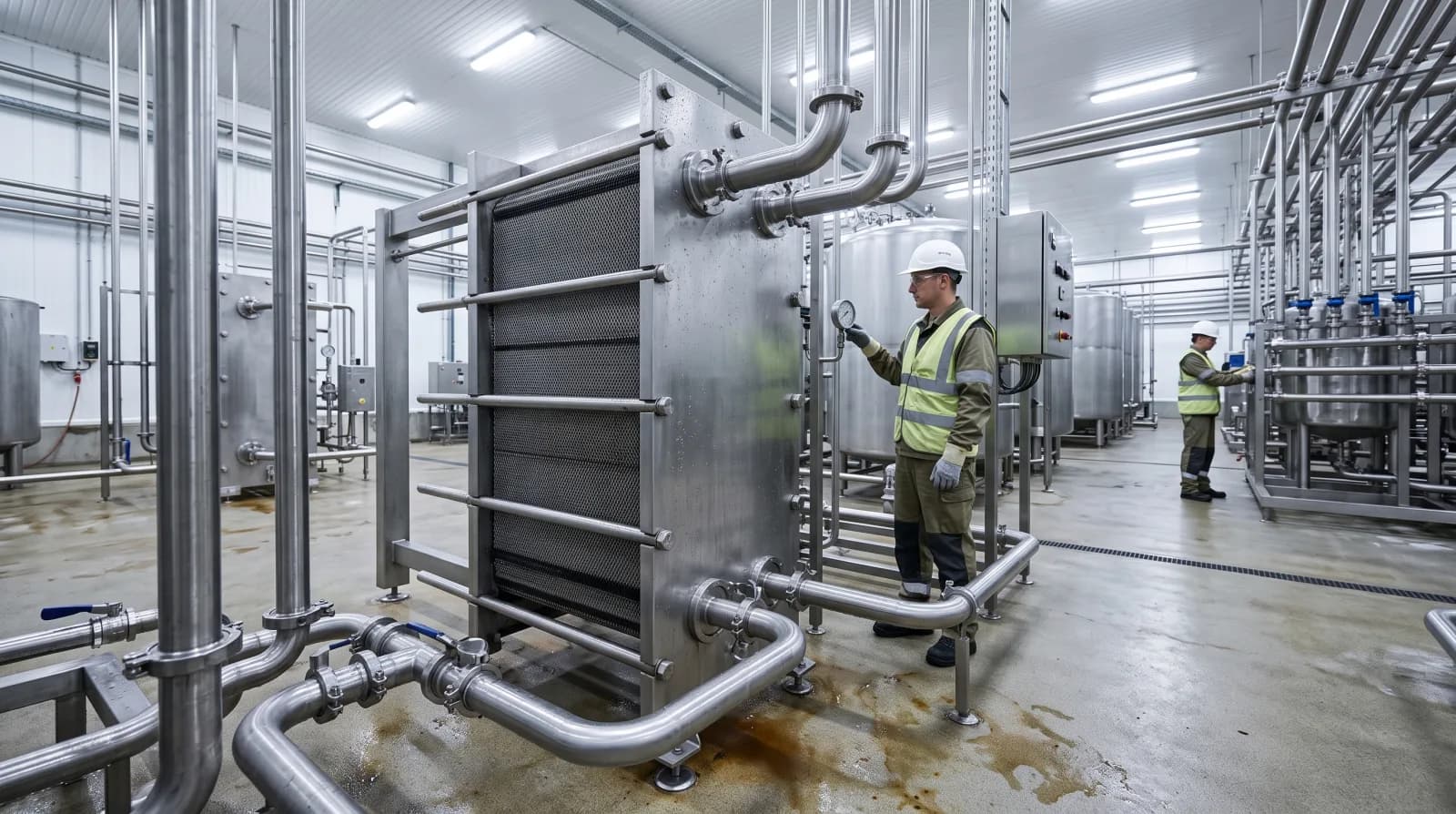
Heat exchanger repairs for food and drink
Heat exchanger repairs for food and drink keep pasteurisers and product coolers fit for food. Send the nameplate and what has happened, and a specialist who works on that type will come back to you. Coverage is UK wide.
Tell us about your food and drink
Five answers, all from memory. The detail comes next, and it is optional.
See the privacy notice for how these details are handled.
Common heat exchanger problems for food and drink
It has failed or is leaking
Fluids mixing, a leak at the unit, or one that will not hold pressure.
Emergency repair →Losing dutyPerformance has dropped
Higher pressure drop, a wider approach temperature, or a duty it no longer reaches.
Cleaning options →PlannedA service or shutdown is coming
Planned maintenance, an outage window, or a spare that needs to be ready.
Servicing options →UnsureNot sure what is wrong
Send the nameplate and what you have noticed. That is enough to get an answer.
Send the details →Heat exchangers used in food and drink processing
Heat exchanger repairs for food and drink processing are shaped by what the unit has to be left fit for. Pasteurisers and product coolers foul differently from utility duties, and the cleaning method has to suit a food contact service.
- Gasketed plate pasteurisers, in regeneration, heating and cooling sections
- Product coolers and chillers, often on glycol
- Tubular exchangers for viscous or particulate products that plates cannot handle
- Scraped surface units on the heaviest products
- Hot water sets and utility plate exchangers behind all of it
How fouling affects food and drink heat exchangers
- Protein fouling
- Heat a protein-bearing product and some of it denatures onto the plate. In dairy it forms a soft deposit at moderate temperatures that grows steadily and is what shortens a run between cleans.
- Mineral deposits and burn-on
- At higher temperatures the deposit turns hard and mineral, and it bonds to the surface. Baked-on protein is the deposit cleaning in place struggles with, and it is the usual reason a pack cleaned in place regularly still needs stripping.
- Run hours, not months
- Fouling here is measured in run hours between cleans rather than months between services. A run getting shorter is the most reliable early signal that the pack needs opening.
- Cleaning is production, not maintenance
- CIP happens every day and is part of the process. That changes what a service is for. The unit is cleaned constantly already, so the service exists to prove the plates are sound.
What affects heat exchanger repairs in food and drink
A cracked plate is a contamination event
Where a leak puts glycol or utility water into product, the consequence is not lost duty but destroyed product and a food safety problem. Product contamination is the single reason plate integrity is worth testing properly.
Gaskets have to suit the product and the CIP
Material is chosen for the product, the temperature and the cleaning chemistry, all three. A gasket that survives the product and fails in the caustic wash is a common enough mistake.
Pressure differential across the plate
Pasteurisers are normally run with the product side at higher pressure than the service side, so that any leak drives outward rather than pulling service fluid into product. Anything that changes pressures across the pack, including a partly blocked section, deserves attention on that basis alone.
Return to a food contact duty
The cleaning chemistry, the rinse and the handling all have to leave the plates fit to go back on product. A food contact duty genuinely narrows the cleaning method, and does not merely add a line to the paperwork.
Short windows, seasonal peaks
Production plans, not maintenance plans, decide when a unit can come out. That usually means either a spare plate pack or an overnight turnaround, and which of those is realistic is worth settling before anything is opened.
Food and drink questions
Why does a pasteuriser need servicing if it is cleaned in place every day?
CIP keeps the product side clean. Cleaning in place removes neither hard mineral deposit nor the contents of a partly blocked channel, and it inspects no plate for cracks. A service is about proving plate integrity, which is a different job from cleaning and is the one that protects the product.
How do we know a plate has cracked?
Usually through product or utility contamination, which is the expensive way to find out. Dye penetrant inspection with the plates out finds cracks and pinholes before they start passing, which is why a strip service is worth more here than in most sectors.
Runs between cleans are getting shorter. What does that mean?
Deposit that CIP is not fully removing, so each run starts from a slightly worse condition than the last. A shortening cycle is a signal to strip and clean properly, not to shorten the cycle again, and product temperature is worth reviewings and flow at the same time.