Plate heat exchanger inspection
Plate heat exchanger inspection finds the cracked plates that let two fluids mix. Send the nameplate and what has happened, and a specialist who works on that type will come back to you. Coverage is UK wide.
Tell us about your plate heat exchanger inspection
Five answers, all from memory. The detail comes next, and it is optional.
See the privacy notice for how these details are handled.
Common plate heat exchanger problems
Weeping at the pack
A leak along the edge of the plate pack, usually the gaskets rather than the plates.
Regasketing →Cross contaminationThe two fluids are mixing
Product or utility appearing on the wrong side, which normally means a cracked plate.
Repair options →Losing dutyPressure drop up, duty down
Fouling between the plates, widening the approach temperature and restricting flow.
Cleaning options →UnsureNot sure what is wrong
Send the nameplate and what you have noticed. That is enough to get an answer.
Send the details →When plates need inspecting
Plate heat exchanger inspection checks each plate for the cracks and pinholes that let the two fluids mix. It needs the pack open and the plates clean, and on a product duty it is the difference between a unit that is fit to return and one that is assumed to be.
- Cross contamination between the two circuits, which usually means a plate rather than a gasket
- Before rebuilding a pack, so the rebuild is not assembled around failing plates
- As part of a planned service, where plate condition is the main thing being established
- On a food, dairy or pharmaceutical duty, where a pinhole is a product risk rather than an efficiency one
- On a unit with no history, before deciding whether it is worth keeping
How plates are inspected
Clean first
Deposit hides cracks, so the plates are cleaned first and examined second.
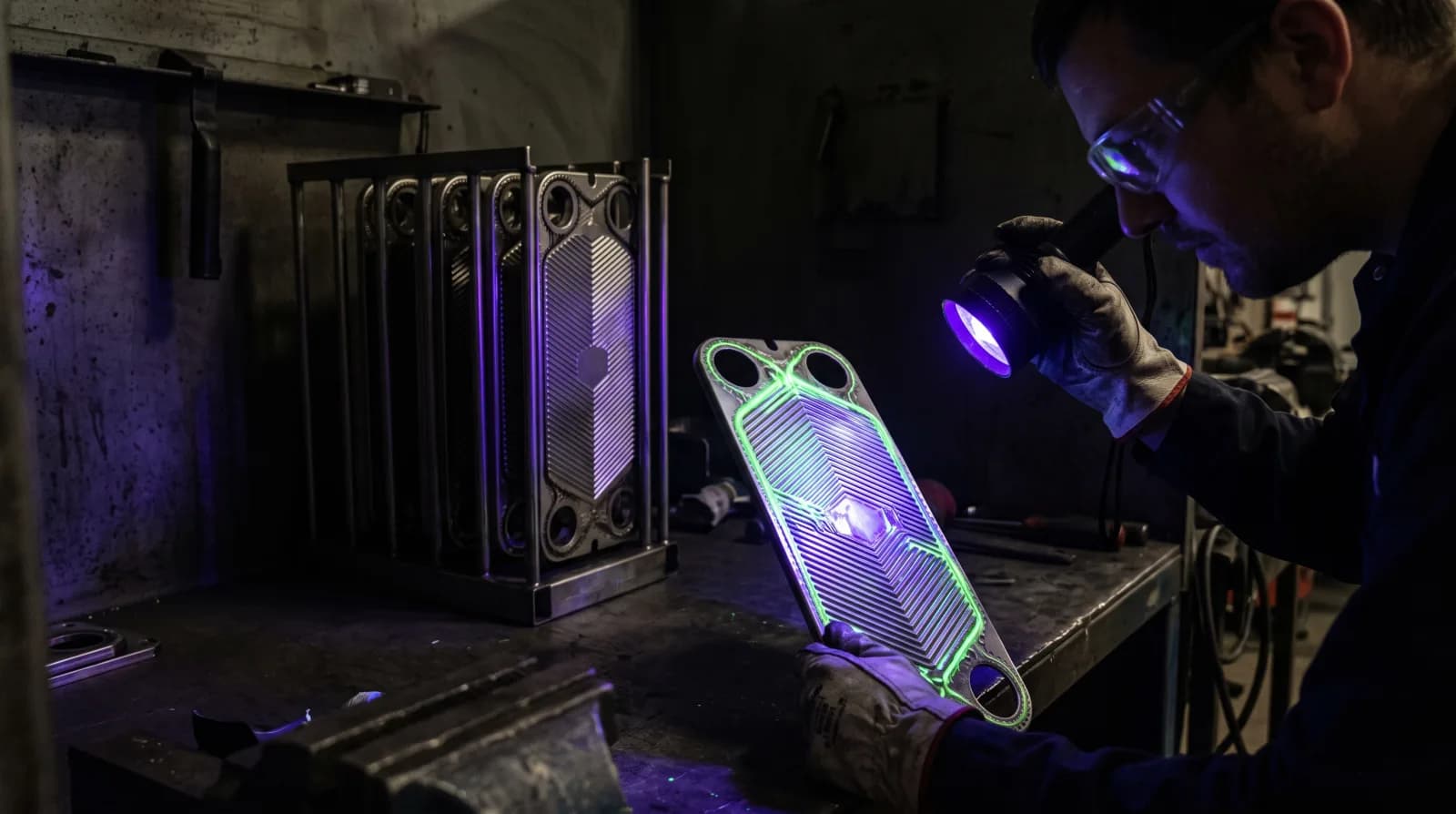
Dye penetrant under ultraviolet light
Penetrant is applied and the plate viewed under ultraviolet light, which shows cracks and pinholes that are invisible in daylight. Cracks commonly start at the corner ports and at the contact points where the corrugations of adjacent plates meet, because those are the most highly stressed parts of the pressing.
Plate by plate, not by sample
A sample tells you about the sample. One failed plate is enough to contaminate the process, so the pack is inspected in full.
Record what fails and where
Which plates failed and their position in the pack. Over successive inspections that shows whether failures are spreading or staying put.
Getting a useful inspection
The pack has to be opened
There is no inspection of plate condition with the pack assembled, and cleaning in place cannot do it either. Plate condition is the main argument for a strip clean over cleaning in place.
Cleaning method affects what can be seen
Aggressive mechanical cleaning can damage the pressing and mask or create indications, which is one reason workshop tank cleaning is gentler than field methods.
Plate cost against replacement
Inspection gives the number of plates needing replacement, and that number is what decides whether to rebuild the unit or replace it.
Keep the format consistent
Inspection is most valuable as a series, so reporting the same way each time is worth more than changing method between visits.
Plate heat exchanger inspection questions
Can a cracked plate be repaired?
No. Cracks run through the pressing and cannot be sealed, so the plate is withdrawn from the pack and a replacement hung in its place.
How do I know a plate has cracked rather than a gasket failing?
A gasket failure normally leaks to the outside. Fluids mixing between the circuits normally means a plate. A pressure test on each side separately settles it.
Do all the plates need inspecting?
Yes, on any duty where cross contamination matters. One pinhole in one plate is enough, and it will not be the plate you decided to sample.