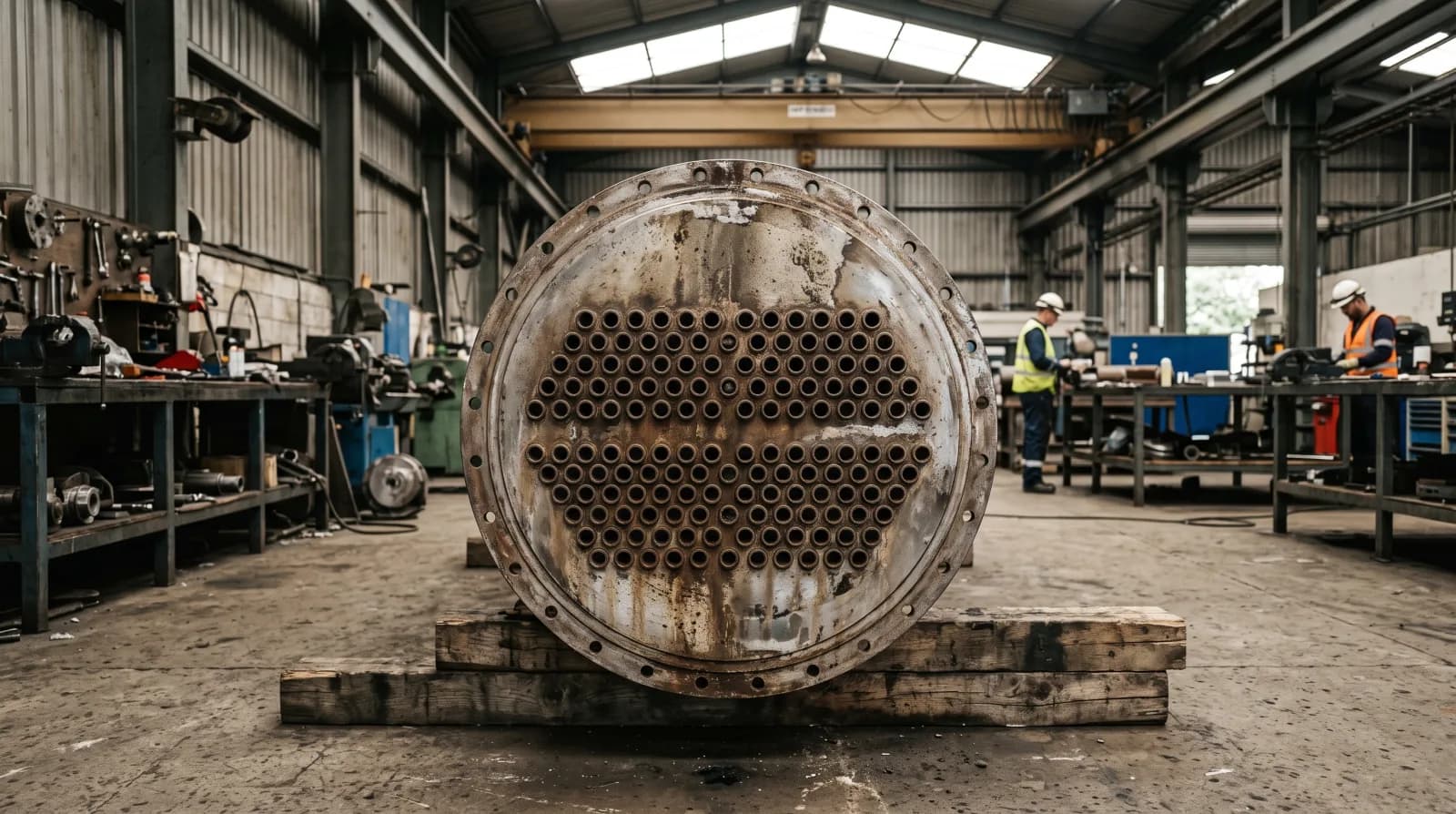
Shell and tube heat exchanger servicing
Shell and tube heat exchanger servicing checks a working unit before an outage decides for you. Send the nameplate and what has happened, and a specialist who works on that type will come back to you. Coverage is UK wide.
Tell us about your shell and tube heat exchanger servicing
Five answers, all from memory. The detail comes next, and it is optional.
See the privacy notice for how these details are handled.
Common shell and tube problems
A tube is leaking
Fluid crossing between the shell and tube sides, from a tube or a tube to tubesheet joint.
Tube plugging →Bundle conditionWall loss across the bundle
Repeat failures in different tubes, or a plugged tube count that keeps rising.
Retubing →Losing dutyFouled tubes and rising pressure drop
Deposit inside the tubes or around the bundle, costing duty at the same flow.
Cleaning options →UnsureNot sure what is wrong
Send the nameplate and what you have noticed. That is enough to get an answer.
Send the details →When to service a shell and tube unit
Shell and tube heat exchanger servicing is planned work on a unit that is still running. What it gives you is the condition of the bundle before it decides for you, which is what a maintenance plan is actually built on.
- A shutdown is coming and the exchanger has not been opened for some time
- The plugged tube count has been rising at each outage
- Performance has drifted rather than failed
- The written scheme examination interval is approaching
- A standby unit that has to be genuinely available
What shell and tube servicing covers
Open and clean
Covers off, tubes and where possible the shell side cleaned, so what is underneath can actually be assessed.
Inspect the tubes
Wall condition measured rather than estimated, by the method that suits the tube material, and mapped to the tubesheet.
Check the rest of the unit
Tubesheet condition, baffle and support wear, gasket faces, and the condition of the shell and channels.
Deal with what is found
Plugging, individual tube replacement, or a recommendation to retube, depending on what the inspection shows.
Rebuild and test
New gaskets, reassembly and a pressure test before the unit goes back into service, with the records the scheme requires.
Planning a shell and tube service
The outage window
Most of this work is governed by a shutdown, so what can be achieved is usually decided by the window rather than by the unit.
Fixed or removable bundle
A U-tube or floating head bundle can be withdrawn and inspected all round. A fixed tubesheet unit cannot, which limits what a service can establish.
Trend, not snapshot
One inspection gives condition. Two give the rate, and the rate is what a maintenance plan is actually built on.
The examination scheme
Where the unit is part of a pressure system, PSSR 2000 and the written scheme set what the competent person needs, and that is agreed before the work rather than after.
Shell and tube heat exchanger servicing questions
How often should a shell and tube heat exchanger be serviced?
The written scheme of examination sets the formal interval. Beyond compliance, the useful interval is the one that catches a trend before it becomes a failure, which depends on how aggressive the duty is.
Does the bundle have to come out?
Not for tube side work. It does for shell side cleaning and for inspecting the outside of the tubes, and on a fixed tubesheet unit it cannot come out at all.
What does the service report tell me?
Which tubes have lost wall and how much, mapped to the tubesheet, plus the condition of the tubesheet, baffles and shell. Against the last report, that turns a guess about remaining life into a plan.