Heat exchanger repairs in Southampton and at Fawley
Heat exchanger repairs in Southampton cover the refining and chemical complex at Fawley and the port around it. Send the nameplate and what has happened, and a specialist who works on that type will come back to you. Coverage is UK wide.
Tell us about your southampton and fawley
Five answers, all from memory. The detail comes next, and it is optional.
See the privacy notice for how these details are handled.
Common heat exchanger problems in Southampton and at Fawley
It has failed or is leaking
Fluids mixing, a leak at the unit, or one that will not hold pressure.
Emergency repair →Losing dutyPerformance has dropped
Higher pressure drop, a wider approach temperature, or a duty it no longer reaches.
Cleaning options →PlannedA service or shutdown is coming
Planned maintenance, an outage window, or a spare that needs to be ready.
Servicing options →UnsureNot sure what is wrong
Send the nameplate and what you have noticed. That is enough to get an answer.
Send the details →Industrial plant in Southampton and at Fawley
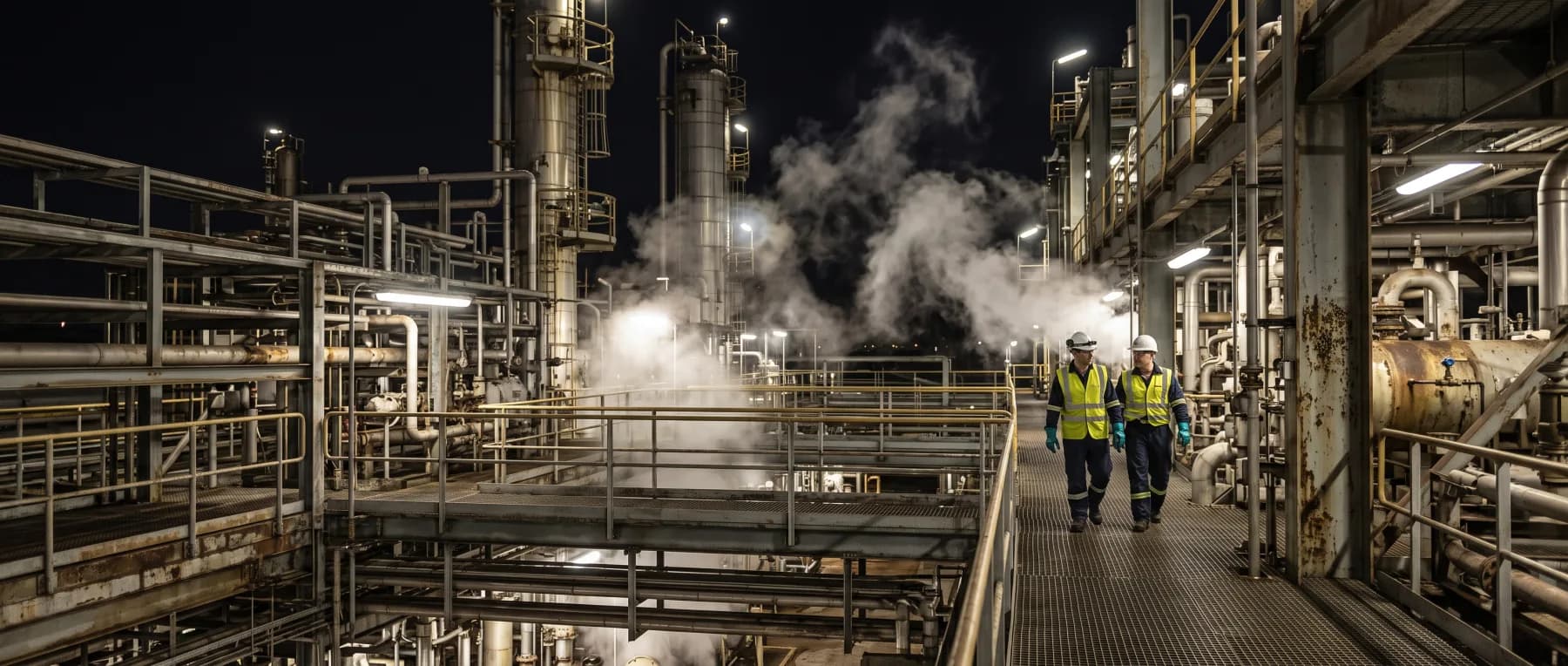
Heat exchanger repairs in Southampton and at Fawley serve one of Europe's largest refining and chemical complexes, next to one of the country's busiest ports, so process and marine work sit side by side.
- Fawley is one of the largest complexes in Europe
- ExxonMobil's Fawley refining and chemical complex processes in the region of 270,000 barrels a day and runs continuously, all year. Checked 1 September 2026.
- A pipeline network rather than a single site
- Product moves out through a pipeline network of several hundred kilometres to distribution terminals and airports. The pipeline network means pumping and heating plant well beyond the refinery fence.
- Chemical manufacturing alongside refining
- It is a petrochemical complex as well as a refinery, so the duties include chemical process services and their materials, not only fuels refining.
- A major port on the same water
- Southampton handles cruise, container and vehicle traffic. Marine plant is a genuine part of the industrial population here: charge air coolers, lube oil coolers and central coolers, on a different maintenance rhythm from process plant.
Heat exchangers used in Southampton and at Fawley
- Refinery and petrochemical shell and tube exchangers across process and utility duties
- Air-cooled units and cooling water services
- Marine coolers on vessels calling at the port, including charge air and lube oil coolers
- Terminal and pipeline heating plant away from the main complex
Southampton and Fawley questions
Is marine work different from refinery work?
In how it is scheduled more than in how it is done. Refinery work is planned around turnarounds months or years ahead; marine work fits a port call measured in hours or days. The same repair techniques apply, but the decision between repairing, swapping for a spare and deferring is made under very different pressure.
What runs continuously and what shuts down?
A complex like Fawley runs around the clock all year, so invasive work waits for a planned outage. Continuous running is why condition monitoring and inspection between outages carry so much weight here. They are what make the outage scope right first time.