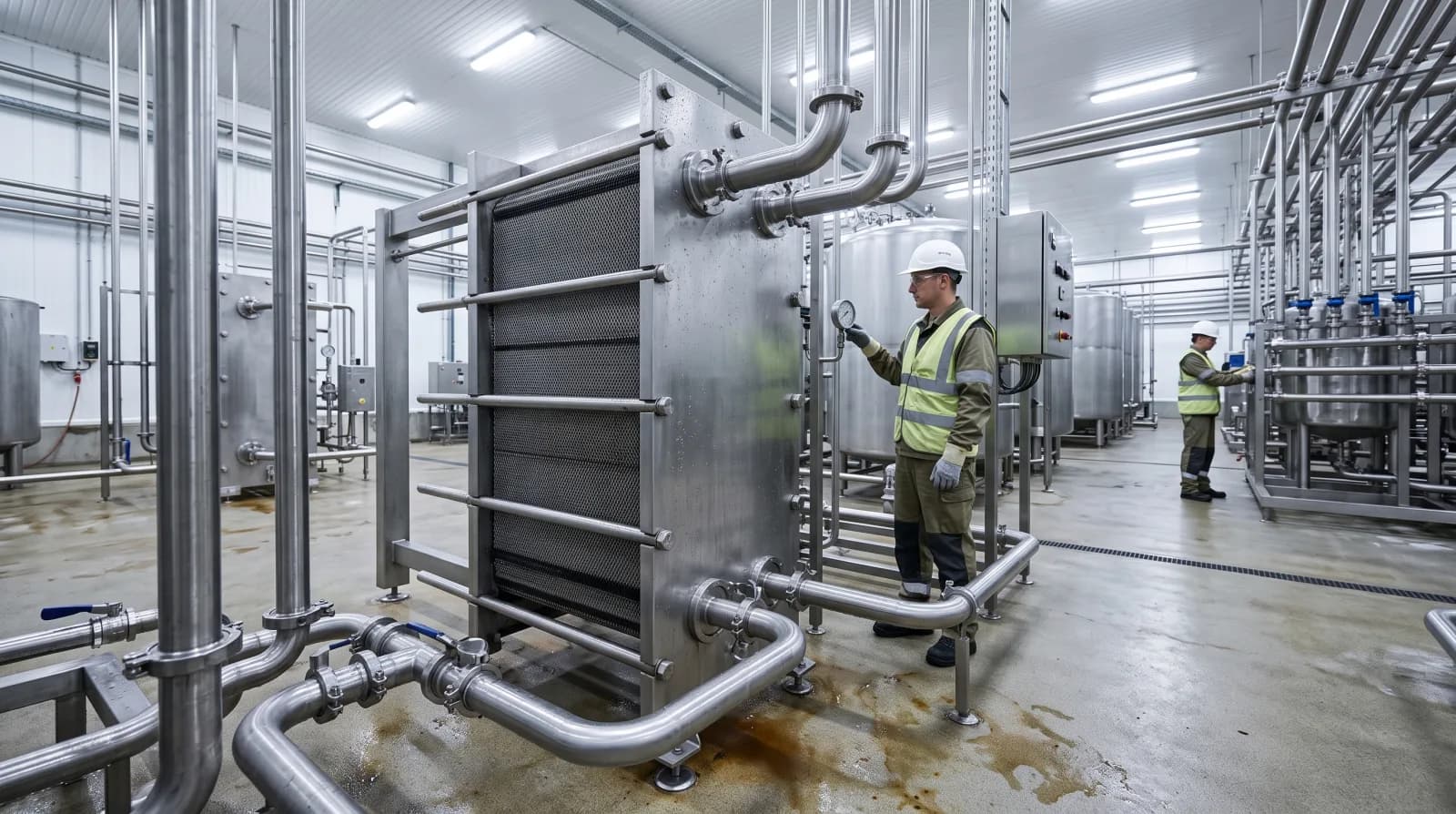
Process heat exchanger repairs
Process heat exchanger repairs protect product from the utility side of the unit. Send the nameplate and what has happened, and a specialist who works on that type will come back to you. Coverage is UK wide.
Tell us about your process heat exchanger repairs
Five answers, all from memory. The detail comes next, and it is optional.
See the privacy notice for how these details are handled.
Common problems that need process heat exchanger repairs
It has failed or is leaking
Fluids mixing, a leak at the unit, or one that will not hold pressure.
Emergency repair →Losing dutyPerformance has dropped
Higher pressure drop, a wider approach temperature, or a duty it no longer reaches.
Cleaning options →PlannedA service or shutdown is coming
Planned maintenance, an outage window, or a spare that needs to be ready.
Servicing options →UnsureNot sure what is wrong
Send the nameplate and what you have noticed. That is enough to get an answer.
Send the details →Process duties covered
Process heat exchanger repairs cover units in contact with product, where a small leak between circuits matters more than a large one to atmosphere. What the unit has to be left fit for is part of the specification rather than an afterthought.
- Units in direct contact with product, where cross contamination is the risk that matters
- Water, chemical and solvent duties
- Pasteurisers, product coolers and heat recovery units
- Loss of duty that is holding back throughput
- Units that have to go back fit for a food or hygienic service
What happens next
Send the details
The unit, the fluids on both sides, and what has changed. On product duties the fluids decide the cleaning method as well as the urgency.
A specialist makes contact
To agree what the unit has to be left fit for, which on a product duty is as important as the repair itself.
Clean, inspect, repair
Cleaning first, then inspection, because a pinhole on a product duty is a contamination risk rather than an efficiency one.
Tested and returned
Both sides tested independently, which is what proves nothing is passing between product and utility.
What affects process work
Cross contamination is the failure that matters
On a product duty a small leak between circuits is worse than a large one to atmosphere, and it is the reason inspection matters more here than elsewhere.
Cleaning has to suit the duty
The chemistry and the rinse have to leave the unit fit to return to product service, which genuinely narrows the options rather than nominally.
Gasket material
Material is matched to the process fluid and the temperature, and on food duties to what is acceptable for contact with product.
Production windows
Work is scheduled around production rather than the other way round, so what is possible in the window usually shapes the scope.
Process heat exchanger repairs questions
Product is appearing in the utility circuit. What does that mean?
The two sides are connected, through a cracked plate, a failed tube or a joint. The unit needs to come off line, and pressure testing each side separately locates it.
Will the unit be fit to go back on a food duty?
That is part of the specification for the work rather than an afterthought. The cleaning method, the chemistry, the rinse and the gasket material are all chosen with the return to product service in mind.
Can plates be reused after a contamination event?
Only if they pass inspection. Plates are checked for cracks and pinholes, and any that fail are replaced rather than refitted.